
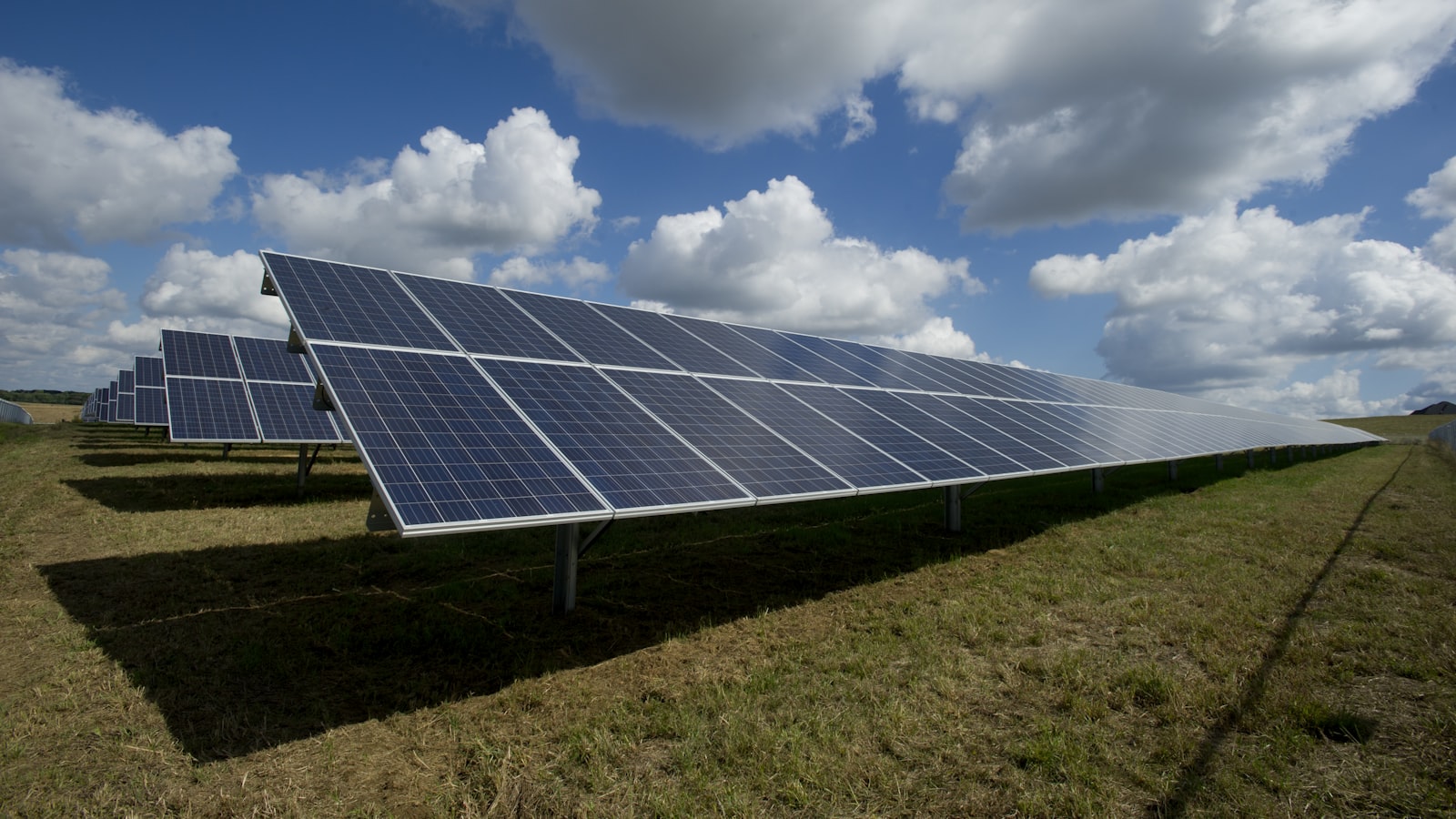
Rooftop solar is the most discussed renewable-energy option for homes, but it’s essentially unavailable to renters. You can’t install panels on a landlord’s roof, the payback period exceeds typical tenancy length, and you’d have to remove them when you leave.
Several solar options do work for renters, however. None match the impact of a full home installation, but they’re genuinely useful additions to a sustainable apartment.
Option 1: Renewable energy tariff
The easiest “solar” option for renters has nothing to do with installing anything. Most UK and European energy suppliers now offer 100 percent renewable tariffs that ensure your supplier matches your electricity consumption with renewable generation (much of which is solar).
The how:
- Use a comparison site to find renewable tariffs available at your address.
- Switch to a 100 percent renewable tariff (takes 15 minutes).
- The supplier handles everything; your electricity supply doesn’t physically change but the supplier sources or pays for renewable generation equivalent to your usage.
The renewable tariffs differ in quality:
- Best: tariffs that source directly from named renewable generators (Good Energy, Ecotricity, Octopus Energy’s renewable tiers).
- Middle: tariffs that match consumption with renewable generation certificates.
- Marketing-heavy: tariffs that claim “green” credentials but rely on certificate trading rather than driving new renewable generation.
The cost: usually competitive with standard tariffs, sometimes slightly cheaper.
Option 2: Community solar schemes
Community solar projects allow renters and others without suitable rooftops to invest in or subscribe to off-site solar installations. The structure varies:
- Cooperative ownership: you buy a share in a solar farm (typically £100-1000). You receive credits on your electricity bill or annual dividend payments based on the farm’s generation.
- Subscription model: you subscribe to a portion of an off-site solar installation. The generated electricity offsets your usage; you pay a subscription instead of standard electricity rates.
- Community-funded installations on local schools, hospitals, or council buildings, with returns to investors.
Examples in the UK include Brighton Energy Cooperative, Ovesco (Lewes), Solar South Hams. Look for “community energy” in your region.
The financial returns vary (typically 3-6 percent annual return). The carbon impact is real but smaller than installing your own panels. The community engagement and political signal are meaningful.
Option 3: Portable and plug-in solar
For tenants with a balcony, terrace, or sunny window, portable solar panels can generate a meaningful amount of electricity:
- Balcony solar panels: small (300-800W) panels designed to hang from balcony railings. Plug into a standard outlet via inverter. Generate electricity that offsets your apartment’s use during sunny periods.
- Window solar: smaller panels designed to attach to windows or sit on sills. Lower output but useful for charging devices.
- Portable solar generators: battery+solar combinations (Bluetti, EcoFlow) for charging devices, running small appliances, providing backup power.
Balcony solar systems (popular in Germany under “Balkonkraftwerk”, balcony power station) typically cost £400-1200 for a working setup. Generate 300-800 kWh/year. Pay back in 4-6 years in most cases. Portable enough to take when you move.
The legal landscape varies: some countries explicitly allow plug-in solar systems; others have unclear rules. Germany, Austria, and increasingly the Netherlands lead in legal clarity. Check current local rules before purchasing.
Option 4: Solar phone chargers and small devices
Small solar panels designed for charging phones, batteries, and small devices are widely available. They’re primarily useful for camping or emergency preparation rather than daily energy reduction.
For an apartment-dweller, solar phone chargers are convenient gadgets but provide minimal energy impact. A typical solar phone charger generates 5-10 Wh/day in good sun; a regular phone charge requires 10-20 Wh. The carbon savings vs. wall charging are minimal.
Option 5: Solar-powered specific appliances
Some specific appliances now come in solar versions for outdoor use:
- Solar string lights for balconies: charge during day, illuminate at night.
- Solar garden lights: for balcony herb gardens, etc.
- Solar-powered fans: for shed or balcony use.
- Solar Bluetooth speakers: mostly novelty.
These have minimal energy impact but can replace small electricity uses without grid connection. Useful in specific situations rather than as primary energy strategy.
The realistic impact comparison
Rough annual carbon savings for typical renter solar options:
- Switch to renewable tariff: 1-3 tonnes CO2 saved/year (depending on starting electricity carbon intensity).
- Community solar share (£500 investment): 200-500 kg CO2/year.
- Balcony solar system (600W): 200-400 kg CO2/year.
- Solar phone chargers: 5-20 kg CO2/year.
- Full rooftop solar (homeowner): 1-3 tonnes CO2/year.
The renewable tariff switch is by far the highest-use option for renters, requires no upfront investment, and has the largest impact. It should be the first move.
Combining options
The ideal solar approach for an apartment-dweller:
- Switch to a quality renewable tariff (highest impact, no cost).
- Invest in community solar if you want to directly support new renewable generation.
- Install balcony solar if you have outdoor space and the legal situation allows it.
- Use solar gadgets selectively where they make sense (outdoor lighting, etc.).
This combined approach can match or exceed the carbon impact of homeowner rooftop solar, without requiring property ownership.
Related: How to Do a DIY Energy Audit of Your Apartment
The advocacy dimension
Beyond personal energy choices, renters can advocate for broader solar deployment:
- Push for solar requirements on new buildings in local planning consultations.
- Support community energy cooperatives.
- Vote for politicians who support renewable energy infrastructure.
- Ask landlords to consider solar installations (especially for buildings with suitable roofs).
- Support business models that aggregate small renewable installations.
Related: Phantom Load: The Standby Electricity Bill You Didn’t Know You Were Paying
The honest assessment
Renters can’t fully replicate the impact of homeowner rooftop solar, but the combination of renewable tariff, community solar investment, and balcony solar can come surprisingly close. The renewable tariff alone often delivers more carbon impact than many homeowner installations, instantly and at no upfront cost.
For an apartment-dweller, the priority order is clear: tariff first, community participation second, balcony installation third if conditions allow. The rest are nice but optional.
Related: Energy Monitor Plugs: Worth the Investment?
Why this matters beyond the household
It is easy to feel that individual sustainability is a small thing in a world of large emissions. The honest framing is that individual practice and structural change reinforce each other rather than competing. When you cycle to work, the count of cyclists in your neighbourhood goes up, which influences local council decisions about cycling infrastructure, which makes cycling easier for the next person who considers it. When you switch to a renewable energy tariff, the market for renewable generation grows, which lowers the cost of new installations and accelerates the energy transition.
These mechanisms are slow and partially invisible from inside any single household. They are also genuinely operative. The cities and countries that have moved fastest on climate are the ones where significant numbers of individuals made early shifts in behaviour, which gave political cover to elected officials who then enacted broader structural changes. Your individual choices are not the whole story, but they are the part of the story you actually control.
The energy math in one table
| Section | What the article covers |
|---|---|
| Option 1: Renewable energy tariff | The easiest "solar" option for renters has nothing to do with installing anything. |
| Option 2: Community solar schemes | Community solar projects allow renters and others without suitable rooftops to invest in or subscribe to off-site solar installations. |
| Option 3: Portable and plug-in solar | For tenants with a balcony, terrace, or sunny window, portable solar panels can generate a meaningful amount of electricity: |
| Option 4: Solar phone chargers and small devices | Small solar panels designed for charging phones, batteries, and small devices are widely available. |
| Option 5: Solar-powered specific appliances | Some specific appliances now come in solar versions for outdoor use: |
Sources and further reading
Frequently asked questions
The good ones (Good Energy, Ecotricity, Octopus Energy renewable tiers) genuinely drive new renewable investment. Cheaper "green" tariffs that rely on certificates have less impact but still positive.
In Germany, the Netherlands, Austria, yes, legally and increasingly easily. In the UK, the legal situation is unclear; check current regulations carefully.
Typically 3-6 percent annual return on investment. Lower than stock market average but with explicit environmental impact. Best for investors seeking impact alongside modest returns.
Mostly no, for energy impact. Yes for specific situations (camping, emergency preparation, travel to off-grid locations).