
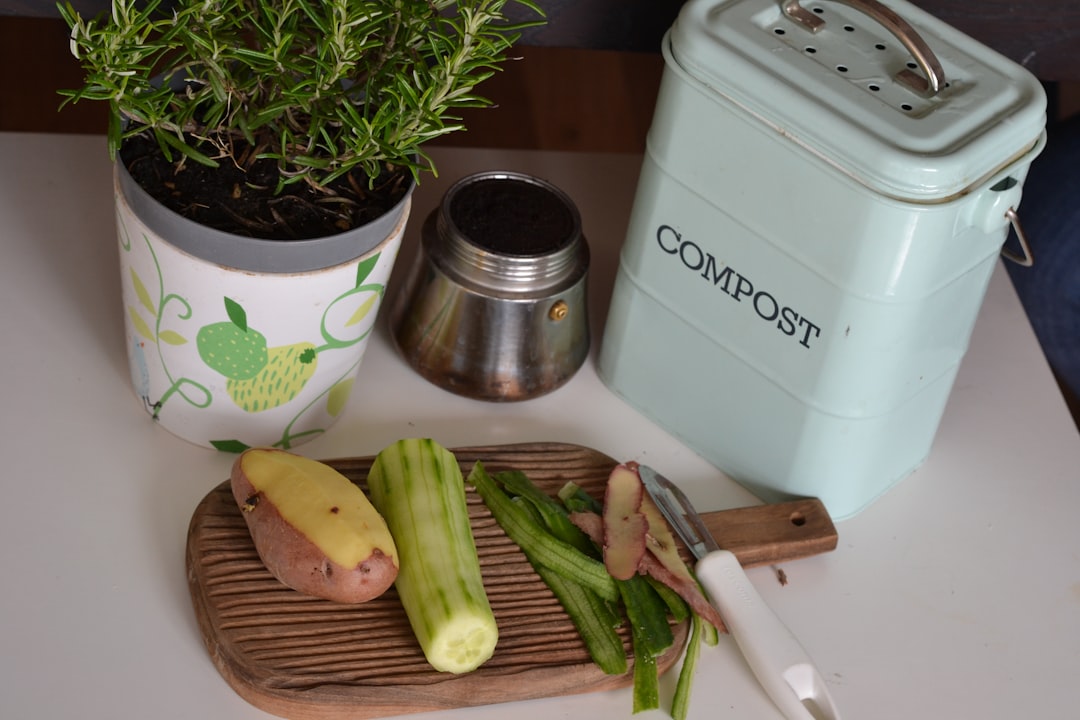
Roughly a quarter of household food waste is scrap trimmings that never become a meal, ends and peels and stems that get scraped into the bin without a second thought. Some of it should indeed go to the bin. Most of it should not. This guide covers a three-tier hierarchy, freeze first, then compost, then bin, that costs nothing, takes 30 seconds a day, and cuts household bin volume by a meaningful share while producing usable stock and reducing methane in landfill.
Every rule below assumes a small flat kitchen. No garden, no wormery yet, no chickens. Just a freezer, a compost caddy or council-collection bin, and a general bin.
Tier 1: Freeze for stock
Most vegetable trimmings freeze cleanly and make better stock than shop-bought after 3 or 4 batches accumulate. What to keep:
- Onion ends, skins optional (skins darken the stock; some cooks prefer this).
- Carrot tops, ends, peels.
- Celery ends and leaves.
- Mushroom stems and offcuts.
- Parsley stems, coriander stems.
- Leek greens, fennel fronds.
- Chicken bones, if you eat chicken, in a separate bag.
What not to freeze:
- Brassicas (cabbage, broccoli, cauliflower offcuts): bitter stock.
- Starchy peels (potato, sweet potato): cloudy stock, sometimes off-flavour.
- Anything with mould, obvious rot, or gone-off smell.
- Salad greens (they collapse to slime on freezing).
The freezer routine, in 30 seconds a day
The physical setup that makes this stick:
- One ziplock or reusable silicone bag in the freezer, labelled “stock scraps.”
- When you cook, scrape acceptable trimmings straight from the board into the bag.
- When the bag is full (usually every 2 to 3 weeks), make stock: pot, water to cover, 90 minutes at low simmer, strain.
- Freeze finished stock in 500 ml portions.
The bag lives in the freezer door for accessibility. If it lives at the back you will forget. This is the single detail that makes the routine survive past week two.
Tier 2: Compost or council collection
What Tier 1 does not use goes to compost or council collection. What each accepts:
- Council food-waste collection (UK, EU, some US cities): Everything. Vegetable and fruit scraps, cooked food, meat, dairy, bones, tea bags, coffee grounds, eggshells, tissues (if unbleached).
- Home bokashi bin: Everything cooked or raw. Ferments over 2 weeks; buried liquid feeds plants; fermented solids go to a wormery or council collection for final composting.
- Home worm bin (wormery): Vegetable scraps, fruit peels (small amounts), coffee grounds, tea bags, crushed eggshells. Not: onion, garlic, citrus (in quantity), meat, dairy, cooked food.
Related: Food Waste Shrinking Flat covers the whole household approach that pairs with this hierarchy.
Tier 3: What actually should go in the general bin
A short list:
- Anything genuinely mouldy or rotten (contaminates compost and stock).
- Highly salted or oil-drenched leftovers (destroys the compost microbial balance in home systems).
- Non-food waste that got mixed in accidentally (bag ties, produce stickers, plastic film).
- Waste that cannot be identified with confidence.
Tier 3 should be small. In a functioning household hierarchy this is roughly 10 to 15 percent of what would previously have been “kitchen waste.”
Where the routine breaks and what to do
Realistic failure modes:
- Freezer fills up. Fix: make stock more often, keep a smaller bag.
- Bag gets forgotten. Fix: put it in the front left of the freezer door where you see it every time you open it.
- Household disagreement about what “counts.” Fix: print a small sticker for the freezer door listing the yes/no lists above. Half the household confusion is about definitions.
- Cooked leftovers going off in the fridge. Fix: a “eat this by” note stuck to the container on cook day. Not scrap hierarchy, but adjacent.
- Council collection missed multiple weeks. Fix: keep a spare caddy under the sink and empty into the main bin only on collection day.
Quick reference: where does this scrap go
| Scrap type | Where |
|---|---|
| Onion ends, carrot tops, celery ends | Freezer bag for stock |
| Broccoli stems, cabbage cores | Council food-waste bin (bitter for stock) |
| Potato peels | Council food-waste bin (cloudy for stock) |
| Cooked leftovers, meat, dairy | Council food-waste bin or bokashi |
| Coffee grounds, tea bags | Council food-waste bin or wormery |
| Mouldy or rotten food | General waste |
| Fruit peels (raw) | Wormery, or council food-waste bin |
| Chicken bones (raw or cooked) | Freezer bag (separate) for bone stock, or council collection |
The numbers, honestly
A household of two doing this consistently ends up with:
- About 1.5 to 2 litres of homemade stock per week from the freezer bag process.
- Roughly 40 to 60 percent reduction in general-waste bin volume.
- Council food-waste bin filling faster (correct: it exists to accept this stream).
- Zero cost. The freezer bag is reusable, the stock replaces shop-bought cartons at roughly £2 to £4 per litre.
What this is not
This is not zero-waste theatre. It is not composting everything. It is not a religion about food. It is a small routine that captures the food value of trimmings that would otherwise be binned, uses the council system for what home systems reject, and keeps the general bin for what genuinely does not belong anywhere else. Total daily commitment: 30 seconds of scraping into a bag.
Most kitchens throw away decent stock ingredients every day. A freezer bag, a caddy for the food-waste bin, and a working definition of the two lists above turn most of that scrap into something useful for essentially no effort.
How the routine feels in month one versus month three
Month one is fiddly: which bag, which bin, which peel goes where, defrost the stock ingredients when. Around week six the decisions become automatic and the freezer bag becomes furniture. By month three most households report they no longer notice the added step, and the general bin fills roughly half as fast as it used to. If the household includes reluctant participants, the fastest path to buy-in is not persuasion but a well-labelled fridge door magnet listing the three lists (freeze, compost, bin). Confusion, not resistance, is the usual reason the system slips.
The stock ingredient nobody thinks about
Corncobs after removing kernels make a surprisingly good sweetcorn stock, worth its own dedicated bag for one week of the year in late summer. Similarly, chicken carcass after a Sunday roast produces about 1.5 litres of much better stock than any cube from a tin. Both are one-off contributions but represent an entire fortnight of the household’s stock use, essentially free.
Sources and further reading
Frequently asked questions
Onion ends, carrot tops, celery ends, mushroom stems, parsley stems, fennel fronds, leek greens, garlic paper. Not: cabbage or broccoli offcuts (bitter), starchy peels like potato (cloudy stock), or anything with mould.
Three to six months in a well-sealed bag. Longer and they develop freezer burn or off-flavours. Label the bag with a start date and use the oldest first, standard kitchen rule.
Council collection accepts cooked food, meat, dairy, bones. Home composting typically does not (draws pests, breaks down slowly). Council collections go to industrial composting or anaerobic digestion, both of which process the harder-to-compost items. Use council collection for anything home composting rejects.
Bokashi bins (fermenting) and worm bins (small wormery) both work indoors and in balcony spaces. Bokashi handles cooked food and dairy; worm bins do not. See the sister article on apartment composting for the full comparison.