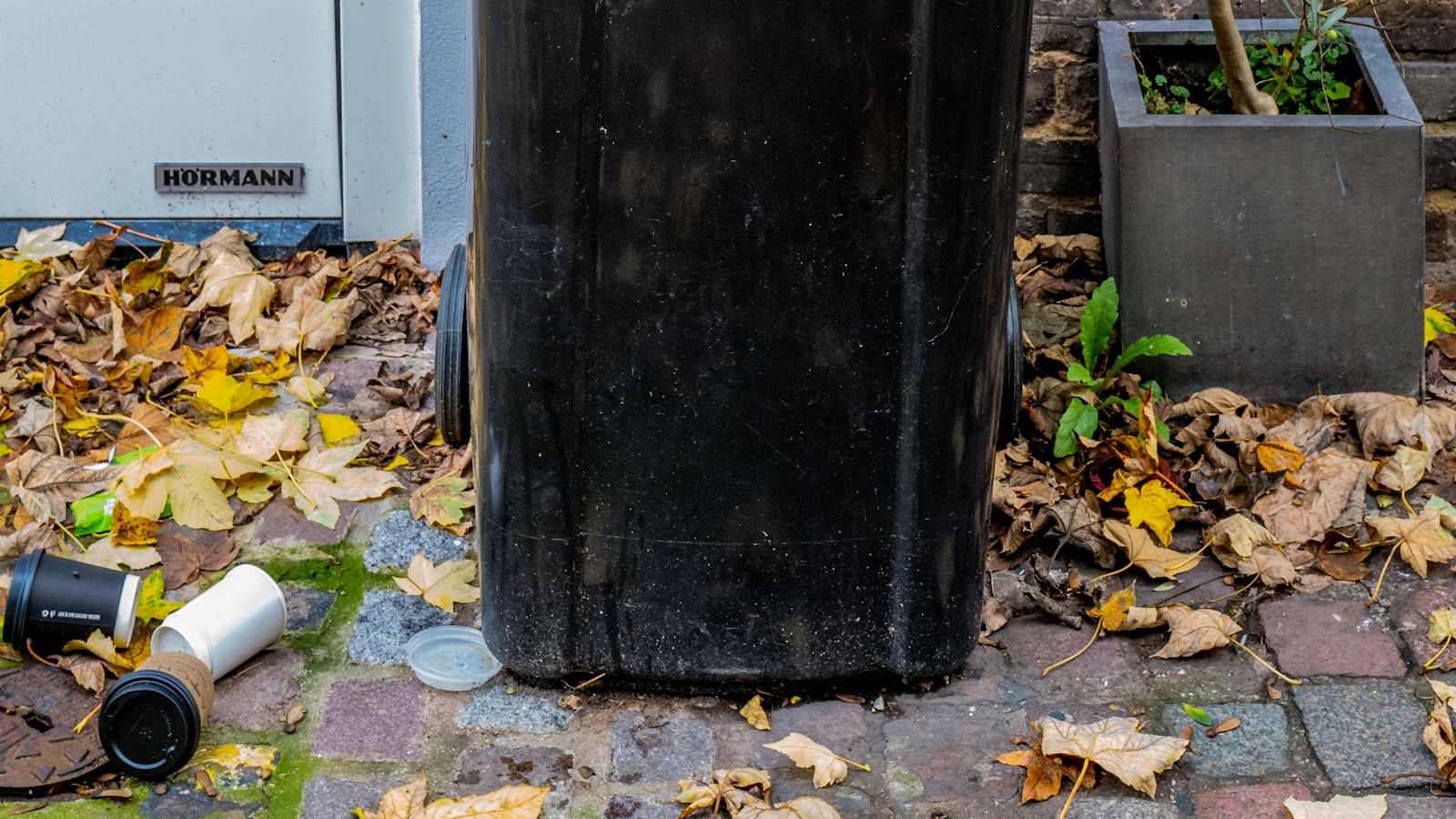
Apartment buildings often have worse recycling than houses, for structural reasons. The bins are shared, so individual accountability is diluted. The bin store is usually messy, so contamination is high. The signage is poor, so even well-meaning residents put things in the wrong bins. As a result, much of what could be recycled ends up in general waste.
Any single resident can dramatically improve this for an entire building, with a few weekends of organisation. Here is how.
Start with assessment, not action
Before changing anything, understand the current state. Spend ten minutes looking at your building’s bin store:
- What bins exist? What is each supposed to contain?
- What is actually in each bin? (Cross-contamination is usually the biggest issue.)
- Is there signage? Is it clear? Is it visible?
- Are the bins accessible? Could a tenant in a hurry easily find the right bin?
- Is there a food-waste bin? (Many buildings lack one even where the council provides it.)
Take photos. This baseline matters when you propose changes, you have evidence of the current state.
The first intervention: better signage
The single most impactful change in most buildings is clearer signage. Most building bin stores either have no signage or have generic council labels that don’t reflect specific local rules.
Make or order clear, large, visual signs:
- One sign per bin, large enough to read from a metre away.
- Visuals (pictures of items, not just text) to handle non-English speakers.
- Specific to your council’s rules (not generic).
- Include common confused items: “Yes: pizza boxes (clean). No: pizza boxes with cheese stuck on.”
Print on weatherproof material or laminate. Attach with strong tape or zip ties. Some councils provide signage on request; print your own if not.
The second intervention: missing bins
Many buildings lack a food-waste bin even when the council provides one. Some lack glass collection. Most lack soft plastic collection (which is usually via supermarket front-of-store anyway).
For council-provided bins, contact the building manager or freeholder to request them. The request should include a brief case (cost savings if it reduces general waste, environmental benefit, simple compliance with council guidance).
For non-council collections (small electronics, batteries, light bulbs), set up a small bring-back box in a sheltered area near the bin store. A single weather-resistant container labelled “Batteries here, taken to recycling monthly” can collect a surprising amount of difficult waste.
The third intervention: the residents’ note
A brief, friendly note to residents about the current state and what would help. Tone matters: not lecturing, not blaming. Something like:
“Hi neighbours, quick note about the bin store. The recycling bins are getting contaminated, which means a lot of what could be recycled is going to landfill. I’ve put up clearer signage; if you have a moment, the new labels make it easy to see what goes where. Also: we now have a food-waste bin (third from the left). Tea bags, food scraps, even small paper bits go in there instead of general waste. Cheers.”
Slip a note under each door, or attach to the building noticeboard. Don’t single anyone out. Frame it as community improvement, not as enforcement.
The fourth intervention: the building chat
Many buildings now have informal residents’ WhatsApp groups or building Slack channels. If yours does, the recycling conversation belongs there. Most people are happy to participate when given a clear ask.
Use the channel for:
- Reminders about collection days.
- Notices about which bins are full.
- Coordinated efforts (e.g., a quarterly “bring your batteries and light bulbs to flat 4 for recycling”).
- Sharing useful local information (which supermarket has soft-plastic collection, where the local repair café meets).
The bin store reorganisation
If your building has a chaotic bin store, a small physical reorganisation makes a disproportionate difference. With a weekend afternoon and a few cheap materials:
- Sweep and clean the area (a clean space invites careful behaviour).
- Arrange bins by category, with the most-used bin most accessible.
- Add a small bench or shelf for sorting (the lack of any surface in most bin stores forces sorting on the floor).
- Improve lighting if possible (a battery-powered motion-sensor light is cheap and transformative).
- Post the council collection day on the wall.
The community garden / composting question
For buildings with even a small outdoor space (a courtyard, a strip of land beside the building, a flat roof), shared composting can be a powerful next step. The barrier is usually permission rather than feasibility.
Propose to the freeholder or management company: a single shared compost bin in an unused corner of the outdoor space, used for residents’ food scraps, managed by a small voluntary rota. The case usually wins on cost savings (less general waste means less collection cost), aesthetic improvement (the area becomes maintained rather than neglected), and resident engagement.
Related: Zero-Waste Myths Debunked: What the Movement Gets Right and Wrong
The political dimension
Beyond the building, the same energy applied to council and political action multiplies the impact. The interventions:
- Attend council consultations on recycling policy.
- Push for kerbside food-waste collection where it doesn’t exist.
- Support extended-producer-responsibility legislation.
- Vote for candidates who prioritise circular-economy infrastructure.
Related: Recycling Mistakes Everyone Makes (And How to Stop Making Them)
The honest difficulties
This kind of community work doesn’t always succeed. Some buildings have residents who are committed to bad recycling habits and won’t change. Some management companies are unresponsive. Some councils provide poor services.
The realistic expectation: a single committed resident can usually improve a building’s recycling rate by 30, 50 percent in a year. They probably can’t hit 100 percent compliance. The improvement is worth it; the perfection isn’t the goal.
Related: Glass vs Plastic Packaging: The Honest Environmental Comparison
What actually recycles
| Key point | What it means in practice |
|---|---|
| What bins exist? What is each supposed | to contain? |
| What is actually in each bin? (Cross-contamination is usually the biggest issue | ) |
| Is there signage? Is it clear? Is it | visible? |
| Are the bins accessible? Could a tenant in a hurry | easily find the right bin? |
| Is there a food-waste bin? (Many buildings lack one even where the council provides it | ) |
The one-year arc
A typical pattern: month one, install signage and write the residents’ note. Months two to three, refine the bin store and get a few residents engaged. Months four to six, expand to additional bins (food waste, batteries, light bulbs). Months seven to twelve, the system becomes self-maintaining.
The compounding effect: when your building visibly handles recycling well, new residents inherit the system rather than starting fresh. The improvement persists across tenant turnover. Five years in, the building has a different waste profile entirely, without any single dramatic intervention along the way.
Sources and further reading
Frequently asked questions
Contact the building manager or freeholder. Most councils provide food-waste bins to buildings on request; the freeholder usually just needs to ask. Persistence usually works.
Better signage usually does more than calling out individuals. If a specific neighbour is consistently problematic (large-scale contamination), the building manager can usually address it.
Yes, the changes you make outlast your tenancy and benefit the building permanently. Recycling improvements often persist for years after the resident who started them moves on.
Document your requests in writing. Contact the council's recycling team directly to request bins. Often the council can provide bins regardless of management company cooperation.