
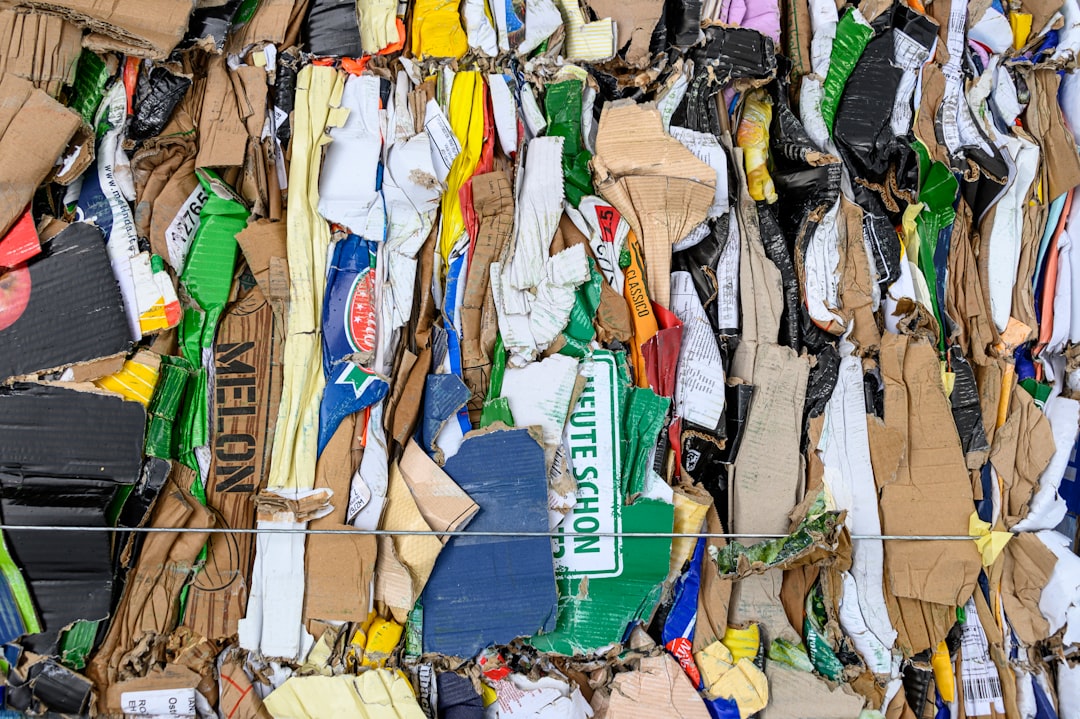
Textiles are the fastest-growing waste stream in most Western cities, driven by fast fashion and cheap online returns. The UK alone throws away roughly 350,000 tonnes of clothing a year, most of which could have been reused or recycled. The reason it is not is not consumer laziness; it is a broken sorting infrastructure that treats every dropped-off item the same way. Understanding where your specific clothing item should go changes whether it becomes new fibre, insulation, an African market resale, or a landfill line item.
This guide covers the four real drop-off options in most cities, what each accepts, and how to sort at home so donations end up processed rather than binned by the sorter.
The four drop-off options and what they actually do
- Charity shops (Oxfam, British Red Cross, Cancer Research, Salvation Army). Best for good-condition clothing that would sell for £3 to £30 in a resale shop. About 20 percent of donations end up on shop floors; 60 percent goes to bulk-export markets; 20 percent is landfilled or downcycled. Do not donate worn-out items here.
- Council textile-recycling banks. The bring-banks in supermarket carparks or high-street corners. Typically operated by SATCoL, JMP Wilcox, LMB Textile Recycling. Accept all textiles including worn-out ones, sort in bulk, route to appropriate downstream markets. About 60 percent goes to reuse, 30 percent to material recycling, 10 percent to energy recovery.
- Retailer take-back schemes (H&M, Zara, Uniqlo, Marks & Spencer, Levi’s). Drop clean textiles in the in-store bin, get a small voucher back (usually £5). Most partner with I:CO for sorting. Route: about 55 percent reused, 35 percent recycled into insulation/wiping, 10 percent energy recovery.
- Fibre-to-fibre pilot programmes. Renewcell, Circulose, Ambercycle, others. Currently accept mostly commercial-scale textile waste; consumer access is limited but growing. Watch for H&M, Zara capsule “recycled with Circulose” branding as evidence the scheme is scaling.
How to sort at home so donations get used
Ten minutes of home sorting doubles the reuse rate of a bag of donations. Sort into four categories:
- Resellable in a charity shop. Clean, no stains, no significant wear, in current-ish style. Goes to Oxfam / Red Cross / equivalent.
- Worn but wearable somewhere in the world. Stains, wear, out-of-fashion but structurally fine. Goes to council textile bank or retailer take-back.
- Truly worn out (holes in fabric body, permanent staining, missing components). Goes to council textile bank in a separate bag marked “recycling only”, not the charity shop.
- Not textiles. Shoes, belts, bags: many bring-banks accept these too; check the label.
Never bag worn-out items with donations for a charity shop; you make the sorter’s job harder and the whole bag more likely to be binned.
What the bins near you actually accept
Some categories are widely rejected or handled poorly:
- Wet or mouldy textiles. Contaminate the whole batch. Do not donate; put in general waste.
- Underwear and socks. Most charity shops decline. Bring-banks and retailer schemes accept.
- Bedding and towels. Bring-banks yes, charity shops variable. Some animal-rescue centres accept bedding directly; call ahead.
- Shoes. Most bring-banks yes, though old worn-out shoes go to material recovery not resale.
- Handbags, belts. Yes to bring-banks and charity shops if usable.
Related: Minimalist Wardrobe for the City Dweller is the upstream companion, covering how to buy less in the first place.
The Africa export question
A large share of European “recycled” clothing ends up in East and West African second-hand markets. Kantamanto in Accra receives about 15 million garments a week. Roughly 40 percent are unsellable on arrival because they are worn out, out of season, or unsuited to the local climate, and are landfilled locally at Ghanaian expense. Reports from Or Foundation and others document the environmental and economic damage.
This does not make textile recycling wrong. It does mean that donating obviously worn-out items to a charity shop is not neutral; it likely just exports the disposal problem. Sorting at home into the correct stream reduces this share.
Fibre-to-fibre, when it is worth chasing
The next generation of textile recycling is fibre-to-fibre: taking a cotton or polyester garment and chemically processing it back into fibre that becomes a new garment. Companies like Renewcell (Circulose fibre), Ambercycle, and Infinited Fiber Company are producing this at kilotonne scale in 2026. Retail exposure is currently a few capsule collections at H&M, Zara, and Ganni.
What this means for consumers: the technology exists but the volume is under 1 percent of the market. Buying fibre-to-fibre products where available signals demand. It is not yet a mainstream option for donating your own worn clothing.
Quick reference: where does this item go
| Item condition | Best destination |
|---|---|
| Clean, current, wearable | Charity shop |
| Worn, stained, out of style | Council textile bank or retailer take-back |
| Worn-through, ripped, unusable | Council textile bank labelled “recycling only” |
| Underwear, socks | Textile bank or retailer scheme (not charity shop) |
| Bedding, towels | Textile bank or local animal rescue |
| Wet or mouldy fabric | General waste; contaminates any recycling bag |
The one bag that changes the numbers
Twenty minutes once a season, sorting the pile of “things to donate” into the four categories above, means about 90 percent of what leaves your flat gets used somewhere, versus about 40 percent if you dump everything in the first charity shop bin. Nothing in this changes the manufacturing side of the fashion problem, which is much bigger, but it does mean the disposal end of your specific wardrobe does not add to the pile at Kantamanto.
The often-forgotten first step: repairing what you already own
Before any donation decision, ask whether the item can be repaired. A visible mend on a wool jumper (kaufer, Sashiko-style darn, careful patch) can extend a garment’s wearable life by three or more years for zero cost beyond a needle and thread. Repair Cafés and Restart Project events increasingly include textile stations alongside electronics. This does not scale to fast-fashion synthetics that were never designed for repair, but for wool, denim, and any natural-fibre garment worth keeping, one afternoon a season of small repairs materially shrinks the textile-donation pile in the first place.
Sources and further reading
Frequently asked questions
Rarely. Charity shops sell what looks resellable and bulk-export or bin the rest. If your clothing is worn out or ripped, put it in a textile-recycling bank or a store take-back scheme (H&M, Zara, Uniqlo) instead. Both handle non-resellable material better.
At small scale. Renewcell, Circulose, Infinited Fiber Company and a few others produce recycled cellulosic fibres that go into new garments (Zara, H&M capsule collections use them). Volume is under 1 percent of the market in 2026. Growing, but not the mainstream yet.
A large share of "recycled" clothing donated in Europe ends up in Ghana, Kenya, and Tanzania second-hand markets. Roughly 40 percent of imports are unsold and landfilled locally. It is not straightforwardly good; the local textile industry is undermined and waste is exported.
Yes, in the sense that they exist and route clothing to sorting partners (I:CO for many brands). About 55 to 60 percent of intake is reused, 35 percent recycled into insulation or wiping cloths, and the remainder disposed. Better than binning, worse than the marketing suggests.