
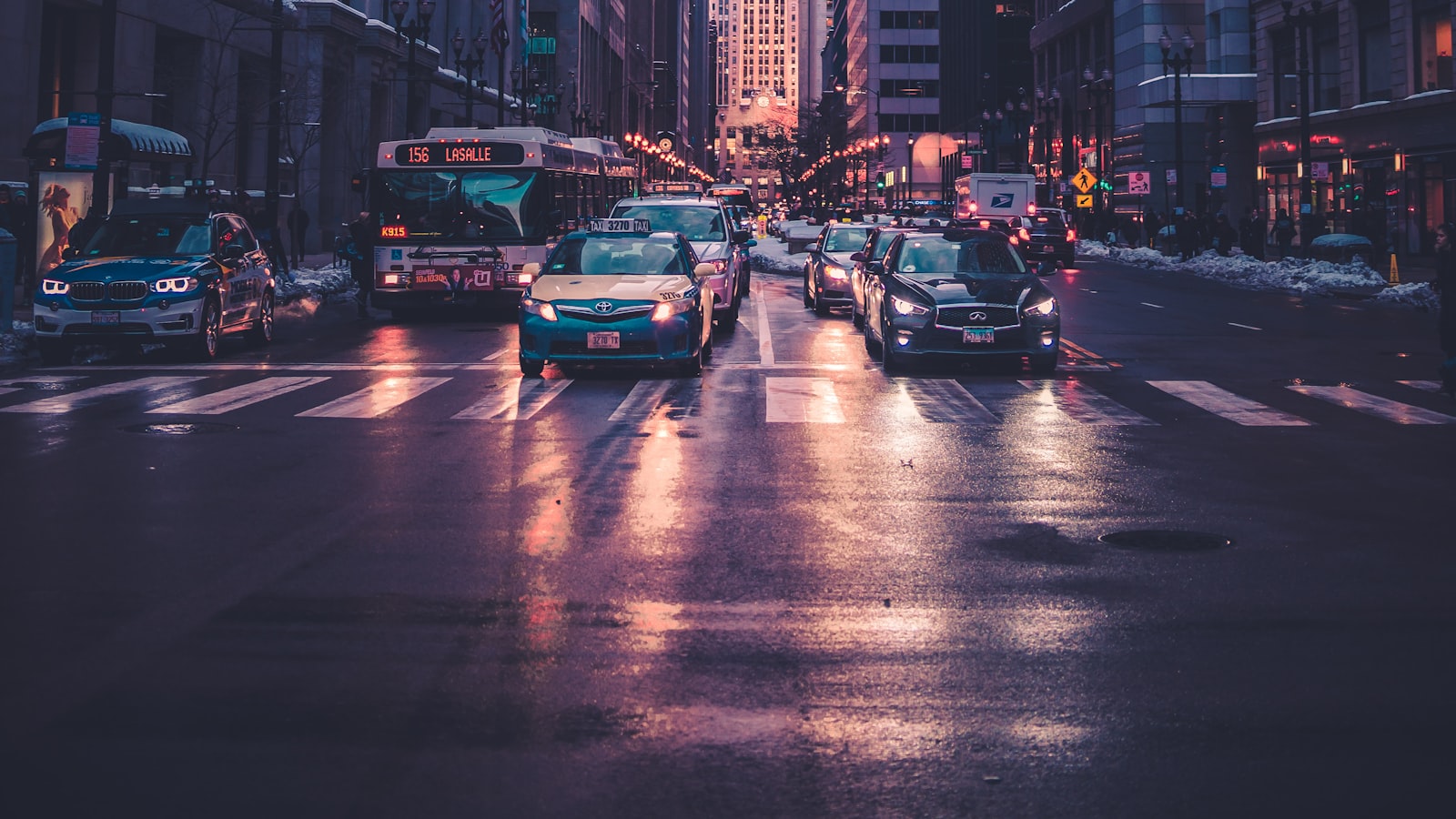
The phrase “walkable city” gets used loosely, often to mean “has nice pedestrian areas downtown.” Real walkability is more specific: it is a city where significant numbers of daily errands and journeys are completed on foot by ordinary people, not just by the determined or by tourists.
Building this kind of walking culture is part design, part policy, and part habit. Here is what the components look like.
The 15-minute test
The clearest measure of walkability is the 15-minute test: from your home, can you walk to a grocery shop, a primary school, a doctor, a pharmacy, a park, and a cafe within 15 minutes? In Paris, Barcelona, Amsterdam, and most European city centres, the answer is yes for the majority of residents. In sprawling American suburbs, it is no for almost everyone.
This is not an aesthetic test; it is a functional one. When essential daily destinations are within walking distance, walking becomes the default for those trips. When they require driving, even people who want to walk cannot.
The infrastructure that enables walking
Walkable infrastructure is unglamorous and well-known: continuous pavements (no breaks every fifty metres for driveways), benches at regular intervals, shade in summer, shelter at junctions, generous crossing times at traffic lights, and lighting at night. These items rarely make architectural magazines but they determine whether walking is comfortable for an eighty-year-old or a parent with a pram.
The single largest invisible factor is the width of pavements. Many city pavements are too narrow for two people to pass comfortably, let alone for someone with a wheelchair or pushchair. Widening pavements by even a metre dramatically increases the volume of walking. This is one of the cheapest sustainability investments a city can make.
Mixed-use planning
Single-use zoning, separating residential, commercial, and industrial areas into different parts of the city, produces unwalkable cities almost by design. If your home is in a residential zone, your shops are in a commercial zone five kilometres away, and your workplace is in another commercial zone seven kilometres in the opposite direction, walking is structurally impossible regardless of how you feel about it.
Mixed-use neighbourhoods, where flats sit above shops, where small offices share buildings with restaurants, where schools are integrated into the urban fabric, produce walking by accident. Most pre-war European city centres are like this. Most post-war Anglo-American suburbs are not. The change requires planning policy more than individual willpower.
Traffic, calmed
Walking on streets with fast or heavy traffic is unpleasant. The single most impactful intervention for walkability is reducing traffic speed in residential and commercial streets to 20 mph or 30 km/h. The effect on walking volumes is dramatic, pedestrian numbers often double within a year of speed reductions on the same street.
Other traffic-calming moves: removing through-traffic from residential streets (low-traffic neighbourhoods), narrowing carriageways to discourage speeding, adding raised crossings and chicanes. These changes are politically contested but consistently produce more walking and more local economic activity.
The economic case
Walkable cities are wealthier per capita and have more diverse local economies than car-dependent ones. The reason is simple: a person walking past a small shop is far more likely to enter and buy than a person driving past at 50 km/h. Streets that are pleasant to walk on become commercial corridors; streets that are pleasant to drive on become commercial dead zones.
Cities that have pedestrianised previously busy streets (Times Square, parts of central London, much of Madrid) have almost universally seen increases in retail spending, property values, and tourism. The fears of “killing the high street” by removing cars have been consistently wrong; the opposite usually happens.
Climate and health benefits
The carbon savings of walking-friendly cities are large. A city where 40 percent of daily trips are walked is dramatically lower-carbon than one where 80 percent are driven. The difference is in the order of tonnes per resident per year.
The health benefits are equally significant. Cities with high walking rates have lower rates of obesity, cardiovascular disease, and depression. The mechanism is not mysterious: incidental daily activity (walking to the shop, walking to school, walking to transit) maintains baseline fitness without requiring a gym. The “active travel” health benefit per resident has been quantified at hundreds of pounds per year in healthcare savings.
Related: Getting to the Airport Sustainably (and Affordably)
The cultural element
Infrastructure is necessary but not sufficient. Walking also requires a cultural acceptance that walking is normal. In cities where walking is socially associated with poverty (as it became in much of America after the 1950s), middle-class adults will resist walking even when the infrastructure supports it. In cities where walking is socially associated with health and urbanity (as it remained in most European cities), the same people walk happily.
The cultural shift takes a generation, but it can be accelerated by changes in language, media, and visible behaviour. Public health campaigns that frame walking as adult, capable, and modern, rather than as exercise or as something poor people do, have measurably increased walking rates in cities that have tried them.
Related: How to Have a Full Week Without Uber or Lyft
What residents can do
Walkability is mostly a municipal-policy outcome, but individuals can contribute. The biggest interventions: walk visibly and often (the most powerful argument for walking is other people walking), support local independent businesses that benefit from foot traffic, attend local planning consultations and vote for traffic-calming and pavement-widening proposals, and avoid the urge to drive for trips under 2 km that could be walked in 20 minutes.
The compounding effect: when 10 percent of residents in a neighbourhood walk more, the street feels safer for the other 90 percent. When 30 percent do, the local shops start to thrive. When 50 percent do, the city council notices and starts investing in better walking infrastructure. The shift is slow but the direction is consistent.
Related: The Electric Scooter Commute, Reviewed Honestly
A note on imperfection
Anyone who tries to live more sustainably for any length of time will encounter the same realisation: perfection is impossible, and trying for it produces burnout faster than it produces results. The articles, podcasts, and social media accounts that promise zero-waste, fully-circular, completely-aligned-with-values living are almost always either dishonest or describing a privileged minority who can afford the time and money required to even approximate it.
The realistic version of sustainable practice tolerates a generous proportion of imperfect choices. Some weeks the shopping is a delivery order rather than a careful bike trip to the greengrocer. Some Saturdays involve a long drive to see family. Some months involve a flight that genuinely could not be avoided. The pattern across years is what shifts the environmental footprint, not the perfect adherence to any specific week. A household that is genuinely 60 percent of the way to a low-impact baseline is dramatically better than one trying to be 100 percent for six weeks and then quitting.
The commute at a glance
| Section | What the article covers |
|---|---|
| The 15-minute test | The clearest measure of walkability is the 15-minute test: from your home, can you walk to a grocery shop, a primary school, a doctor, a pharmacy, a park, an… |
| The infrastructure that enables walking | Walkable infrastructure is unglamorous and well-known: continuous pavements (no breaks every fifty metres for driveways), benches at regular intervals, shade… |
| Mixed-use planning | Single-use zoning, separating residential, commercial, and industrial areas into different parts of the city, produces unwalkable cities almost by design. |
| Traffic, calmed | Walking on streets with fast or heavy traffic is unpleasant. |
| The economic case | Walkable cities are wealthier per capita and have more diverse local economies than car-dependent ones. |
Sources and further reading
Frequently asked questions
Common answers include Amsterdam, Copenhagen, Tokyo, Paris, and Barcelona. The exact ranking depends on the metric (density, infrastructure, climate, modal share). The shared feature is mixed-use, dense, transit-rich design with calmed traffic.
Attend local planning meetings, comment on transport consultations, support resident groups campaigning for low-traffic neighbourhoods. The data on health, safety, and economic outcomes consistently supports walkable design.
Yes, when comparing per-kilometre. Walking is essentially zero direct carbon. Transit is roughly 30, 80 g CO2 per passenger-km. For trips under 2 km, walking is usually the lowest-carbon and often fastest option.
Public Health England estimates 30 minutes of walking five times a week reduces risk of major chronic diseases by 20, 30 percent and adds two to four years of life expectancy. The dose-response is large.