
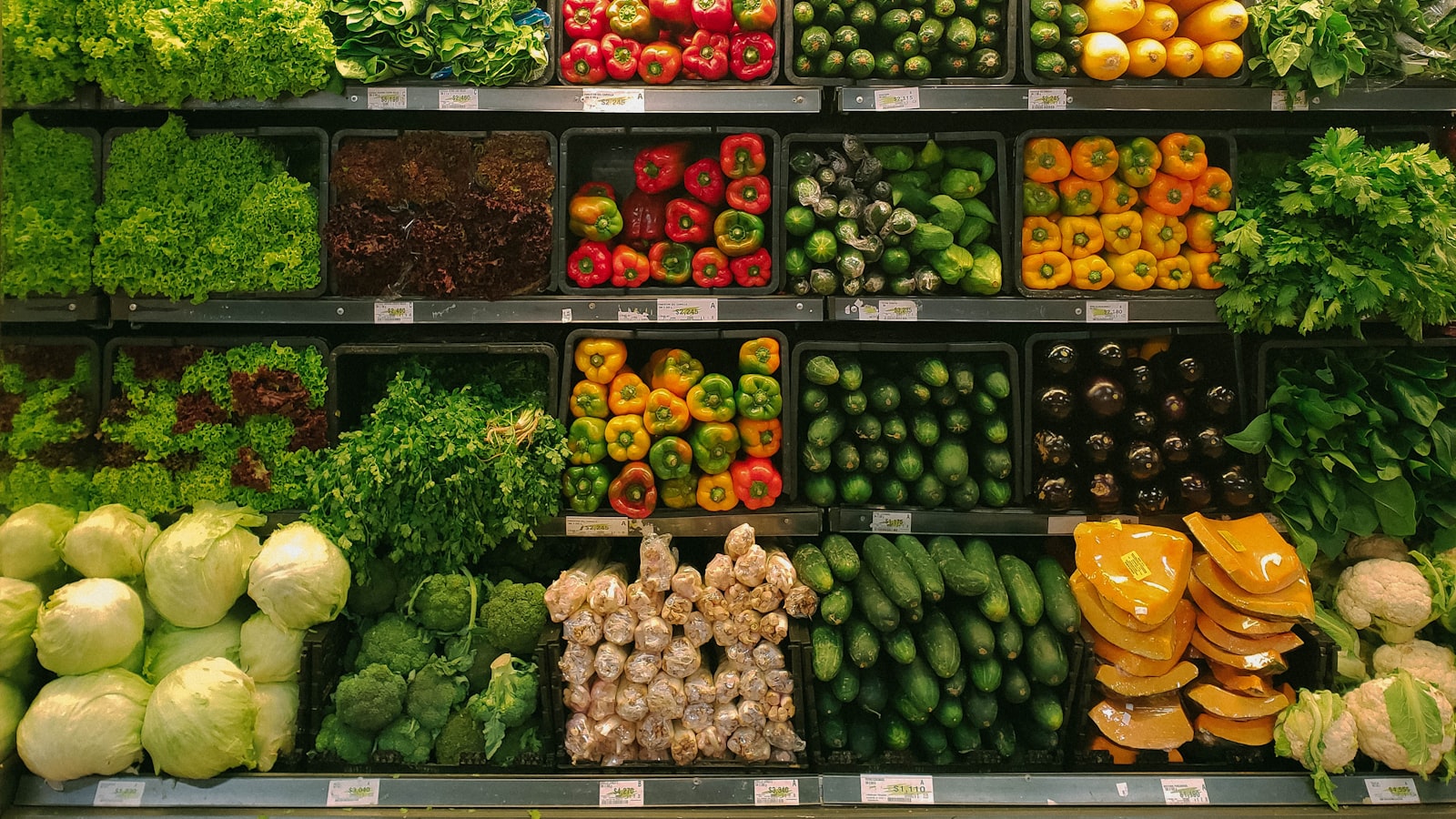
The sustainable-grocery-shopping conversation usually assumes you have a Saturday morning free, a canvas bag in every coat, and a willingness to drive to a vineyard for unwaxed lemons. For city tenants, the reality is closer to a 7pm dash to the corner shop, an app delivery on Sunday evening, and a vague guilt about how often you reach for the convenience option.
Here is what an actually sustainable city grocery routine can look like, designed around the schedule of a person who works, commutes, and does not have time to make their own kombucha.
Step one: a 20-minute weekly review
Once a week, ideally on a Sunday morning or a Wednesday lunch, spend twenty minutes doing three things: empty the fridge, list what is left, and write a five-meal plan around what is left. Only after that list is complete do you write a shopping list.
This sounds tedious. It is the single move that prevents the great city-tenant grocery sin: buying a fresh ingredient on Sunday, forgetting you already had one in the back of the fridge, and discovering both, mouldering together, on Friday. A twenty-minute review buys you a week of low-friction cooking and roughly halves household food waste.
Step two: split your shopping into two rhythms
Once a week, do a planned shop. This is the boring shop. Pasta, oats, tinned tomatoes, frozen peas, the predictable staples. Buy it however is most efficient, online delivery if you live above a tight stairwell, a brisk supermarket trip if you are passing on the way home.
Twice a week, do a tactical shop. This is the fresh shop, ideally at a local greengrocer or small market. You buy what you will eat in the next 48 hours: a bunch of greens, a punnet of tomatoes, a fresh fish or piece of chicken, a loaf of bread. The two-day window keeps the bag small, the produce alive, and the impulse purchases under control.
This split also unbundles the sustainability decisions. Planned shop: minimise packaging, choose the unprocessed staple. Tactical shop: support the local greengrocer, buy seasonal, no delivery emissions.
Step three: shop the perimeter, mostly
A boring trick that genuinely works. Most supermarkets put fresh fruit, vegetables, bread, dairy, fish and meat around the perimeter. The middle aisles are overwhelmingly packaged, processed, and longer-shelf-life. The more of your shop happens on the perimeter, the more sustainable it tends to be by default, less packaging, more local supply chain, more nutritional value per pound spent.
The middle aisles are not banned. They are simply the place to be deliberate. A box of pasta? Yes. Eight different flavoured crisps you did not plan to buy? Probably not.
Seasonal eating without the spreadsheet
Eating with the seasons is one of the higher-use sustainability moves a city kitchen can make. Out-of-season produce, especially fragile fruit and salad, often travels by air and has roughly ten times the carbon footprint of its in-season equivalent. The trouble is that most people give up on seasonality because they cannot remember what is in season.
The workaround is to skip the spreadsheet and simply shop the front of the greengrocer. Whatever is piled at the entrance, in the largest crates, at the best prices, is in season. That is how greengrocers stock. If you build your fresh shop around that front display three times out of five, you are eating roughly seasonally without having to know that asparagus is May to June and squash is October to February.
Packaging, but realistically
Switching to all-loose, all-unpackaged shopping is a beautiful aspiration that breaks on first contact with a delivery cycle. The realistic goal is to reduce packaging materially, not to eliminate it.
- Bring two cotton bags for produce and a single canvas tote for the trip. That alone replaces dozens of plastic bags a year.
- Default to glass over plastic when both exist (jars, milk bottles, condiments).
- Default to paper or cardboard packaging over plastic where there is a choice (pasta in paper, salt in cardboard).
- Skip individually wrapped versions of anything (single-serve yoghurts, snack bars, cheese slices).
The cumulative effect of four defaults like these, applied weekly, is bigger than the occasional zero-waste shopping trip you romanticise but never quite take.
The protein question
Protein is the single highest-use category in a grocery basket from a sustainability angle. Beef, lamb, and intensively farmed shrimp dominate the climate footprint of the average urban food shop. You do not need to become vegetarian to halve your food-related emissions; you need to push beef and lamb into a special-occasion category rather than a default category.
A realistic protein rotation looks like: three vegetable-first dinners a week (pulses, eggs, tofu, beans on toast), two chicken-or-fish dinners, one slow-cooked beef or lamb dish per fortnight as a treat. That single shift outperforms most other sustainable-eating interventions combined.
Related: The Minimalist City Wardrobe That Still Looks Like a Person Lives There
The corner-shop top-up rule
City living comes with corner shops. They are convenient, they are local, they are often family-run businesses worth supporting. They are also priced to assume you are buying one or two items, not your weekly groceries.
Make the corner shop the rescue stop, not the main shop. Use it for the missing onion, the loaf you forgot, the pint of milk. Avoid using it as a substitute for the planned weekly shop, because per-pound the packaging and the prices both work against you.
Related: Reducing the Shipping Impact of Your City Life (Without Quitting Online Shopping)
What success looks like
You will know this routine is working when three things happen. The fridge clears out almost completely once a week. Food waste drops noticeably (you’ll see it in the bin). You spend roughly the same money but eat better food, more often. That is the unromantic, repeatable version of sustainable city grocery shopping.
Related: The Renter’s Eco-Friendly Bathroom Routine
At a glance
| Key point | What it means in practice |
|---|---|
| Bring two cotton bags for produce and a single canvas tote for the trip | That alone replaces dozens of plastic bags a year. |
| Default to glass over plastic when both exist (jars | milk bottles, condiments). |
| Default to paper or cardboard packaging over plastic where there is a choice (pasta in paper | salt in cardboard). |
| Skip individually wrapped versions of anything (single-serve yoghurts | snack bars, cheese slices). |
What an experienced household looks like
It is worth being honest about what good practice in this area looks like after several years of attention. It is not a magazine-perfect lifestyle. The bins are sorted but not labelled in artisan calligraphy. The pantry has a small set of jars rather than a coordinated wall display. The flat smells like whatever was cooked, not like a perfumed lobby. The energy bill is lower than the neighbourhood average but the household still has a TV, a kettle, and a freezer.
What is different is the defaults. The reusable bag is genuinely in the everyday bag. The thermostat is genuinely scheduled. The food in the fridge is genuinely used before being wasted. The shopping is genuinely planned rather than improvised. None of this requires the household to think harder about sustainability than the average household; it requires the defaults to have been set once and then left alone. The mental load of good practice is, in the long run, significantly lower than the mental load of constantly negotiating with disposable habits.
Sources and further reading
Frequently asked questions
Per-grocery, online delivery is usually lower carbon than driving to a supermarket and similar to walking or cycling, because vans aggregate dozens of trips. The exception is single-bag, instant-delivery services on a scooter, those undo the efficiency.
No. Organic food typically has better local-ecosystem outcomes (less pesticide runoff, healthier soil) but its carbon footprint per kilogram is similar to conventional. For sustainability, prioritise seasonal and plant-forward first, organic second.
Shop the front of a greengrocer for the cheapest, most prominently displayed produce, that is almost always what is in season locally. A printed seasonal chart from your country food agency is a useful backup.
Absolutely. Almost every move in this guide is free or saves money. Cutting meat, eating seasonally, and reducing food waste are all financially positive. Specialty eco-shops are optional, not essential.