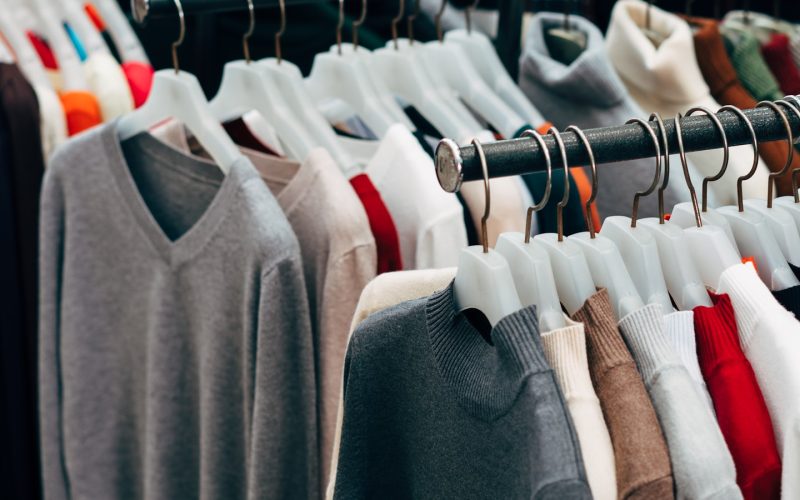

The fashion industry is one of the most environmentally damaging sectors of the modern economy. Producing a single cotton t-shirt requires roughly 2,700 litres of water and significant carbon emissions. Most clothes are worn fewer than 10 times before being discarded. The environmental case for keeping clothes in circulation longer is overwhelming.
Clothes swaps are one of the more practical responses: events where neighbours bring clothes they no longer wear and take home others’ contributions. Done well, they’re fun, environmentally meaningful, and surprisingly effective.
The basic model
A clothes swap typically operates like this:
- Attendees bring 5-15 items of clothing they no longer wear, in good condition.
- Clothes are pooled and sorted by category (tops, bottoms, dresses, outerwear, accessories).
- Attendees browse the collection and take what they want.
- Remaining clothes are donated to charity shops or textile recycling.
The whole event typically takes 2-3 hours. No money changes hands. Everyone leaves with new (to them) clothes and the satisfaction of contributing to reduction.
Why they work
Several factors make clothes swaps effective:
- Trust. Clothes from neighbours feel more trustworthy than anonymous secondhand.
- Visual sorting. Seeing items physically (rather than scrolling photos online) leads to better choices.
- Social context. Trying on with friends is more fun than alone.
- No financial pressure. Items are free; experimentation is encouraged.
- Local convenience. No shipping, no driving, no parking.
- Direct impact. Tangible items that would have been waste become items worn for years.
The format that works
Successful clothes swaps share characteristics:
Pre-event preparation
- Clear rules communicated in advance (item quality, quantity limits, condition).
- Adequate venue (community space, friend’s flat, church hall, needs surface area for displaying clothes).
- Basic supplies (clothing racks if available, full-length mirror, change room or curtained area).
- Sorting categories prepared in advance.
The drop-off period
Attendees arrive with clothes, often before browsing begins. This gives sorting time. Volunteers (or hosts) organise items by category as they arrive.
The browse period
The bulk of the event. Attendees browse, try on, take what they want. Lasts 1-2 hours typically.
The wrap-up
Remaining items are gathered for donation. Hosts and volunteers reset the space.
The quality standards
For events to feel valuable rather than feel like a charity dump, items must meet basic standards:
- Clean and recently washed.
- No holes, stains, or excessive wear.
- No damaged zips or missing buttons.
- Modern enough to be wearable (not 30 years out of style unless retro is popular).
- Free from strong smells (smoke, mildew).
Communicate these standards clearly in advance. Have a “donate directly to charity” pile for items that don’t meet swap standards.
The category sorting
Effective sorting categories:
- Tops (further split by sleeve length, formal/casual).
- Bottoms (split by type, jeans, trousers, skirts, shorts).
- Dresses.
- Outerwear (jackets, coats, blazers).
- Knitwear.
- Activewear and casual.
- Accessories (bags, belts, scarves, hats).
- Shoes (often a separate area).
For larger swaps, also sort by size within categories. Smaller swaps can mix sizes within categories.
The size question
Sizes are emotionally loaded for many people. Sensitivities:
- Don’t loudly comment on sizes.
- Provide a mix of sizes to ensure inclusivity.
- Some swaps are explicitly size-inclusive, advertising welcome for all sizes.
- Avoid grouping items as “plus size” or similar, just sort by actual size.
The men’s clothing problem
Many clothes swaps end up dominated by women’s clothing because women’s fashion turnover is higher. To attract men:
- Explicit invitation in promotion (clothes swaps often default to female-perceived events).
- Specific men’s sections.
- Encourage attendees to bring partners.
- Some swaps run as gender-mixed events explicitly.
The frequency
How often to hold swaps:
- Quarterly. Aligns with seasonal wardrobe changes. Most popular cadence.
- Twice-yearly (spring/autumn). Aligned with wardrobe rotation.
- Monthly. Requires more committed attendees; works for tighter communities.
- Specific event-based. Pre-holiday season, post-spring-cleaning.
The venue options
Possible venues:
- Community centres: often hire-free or low-cost for community events.
- Church halls: usually affordable.
- Friends’ homes: works for small swaps (15-30 people).
- Cafes (off-hours): some cafes welcome events that bring people in.
- Office spaces: companies sometimes host as employee benefit.
- Outdoor in summer: parks with picnic tables work for casual swaps.
The leftover protocol
Decide in advance what happens to unswapped items:
- Donate to a specific charity shop. Some events partner with specific charities.
- Send to textile recycling. For items beyond reuse.
- Hold for next swap. Some hosts keep items for the next event (requires storage space).
- Free pile for non-attendees. Some events leave a final “anyone can take” pile in the venue.
The promotion
How to attract attendees:
- Word of mouth (most effective for first events).
- Building or neighbourhood WhatsApp groups.
- Local Facebook community groups.
- Posters at community spaces.
- Mention at related events (community gardens, repair cafes).
- Local newspaper community listings.
Target attendance: 20-50 people for a small event; 50-150 for a medium event. Larger events get unwieldy.
The challenges
Predictable issues:
- Quality mismatch. Some attendees bring poor-quality items expecting to take good items. Quality standards help.
- Hoarding. Occasional attendees take many items, planning resale. Address through item limits or norms.
- Sizing imbalance. Sometimes few items in certain sizes. Promote inclusive attendance.
- Donation logistics. Unswapped items can be substantial; coordinate with charity in advance.
- Venue sizing. Too small feels cramped; too large feels empty.
Related: Finding (and Supporting) Local Makers Markets
The cumulative impact
A neighbourhood that runs quarterly clothes swaps over several years typically generates:
- Thousands of garments kept in circulation rather than discarded.
- Significant water and carbon emissions avoided (manufacturing offsets).
- Genuine community connections formed.
- Increased local awareness of fashion sustainability.
- Sometimes spawn related initiatives (repair cafés, sewing workshops, kids’ clothes swaps).
Related: Apartment Etiquette: Quiet Hours, Smells, and the Other Unwritten Rules
The honest summary
Clothes swaps are accessible, low-cost, and meaningfully impactful sustainability initiatives. They’re also genuinely fun, there’s a treasure-hunt quality to browsing that’s missing from most shopping experiences.
The investment to start one is modest: a venue, some sorting time, basic promotion. The benefits, for the environment, for individual budgets, and for community building, are real and recurring.
Related: Shared Spaces in Apartment Buildings: The Rules That Make Them Work
A note on imperfection
Anyone who tries to live more sustainably for any length of time will encounter the same realisation: perfection is impossible, and trying for it produces burnout faster than it produces results. The articles, podcasts, and social media accounts that promise zero-waste, fully-circular, completely-aligned-with-values living are almost always either dishonest or describing a privileged minority who can afford the time and money required to even approximate it.
The realistic version of sustainable practice tolerates a generous proportion of imperfect choices. Some weeks the shopping is a delivery order rather than a careful bike trip to the greengrocer. Some Saturdays involve a long drive to see family. Some months involve a flight that genuinely could not be avoided. The pattern across years is what shifts the environmental footprint, not the perfect adherence to any specific week. A household that is genuinely 60 percent of the way to a low-impact baseline is dramatically better than one trying to be 100 percent for six weeks and then quitting.
How the shared arrangement works
| Point | What it means in practice |
|---|---|
| Pre-event preparation | Attendees arrive with clothes, often before browsing begins. |
| The drop-off period | Attendees arrive with clothes, often before browsing begins. |
| The browse period | The bulk of the event. |
| The wrap-up | Remaining items are gathered for donation. |
Sources and further reading
Frequently asked questions
For successful events: 20-50 people for small swaps; 50-150 for medium; 150+ requires more organisation. Start small and scale up.
Pre-arrange donation to a charity shop or textile recycling. Most events have 30-50 percent of items going to donation rather than swapping. This is normal and still beneficial.
Often defaulting that way, but increasingly mixed. Explicitly invite all genders in promotion; provide men's clothing categories prominently.
Mostly no, it changes the dynamic from community sharing to transaction. Some events have suggested donations to cover venue costs; explicit fees are unusual.