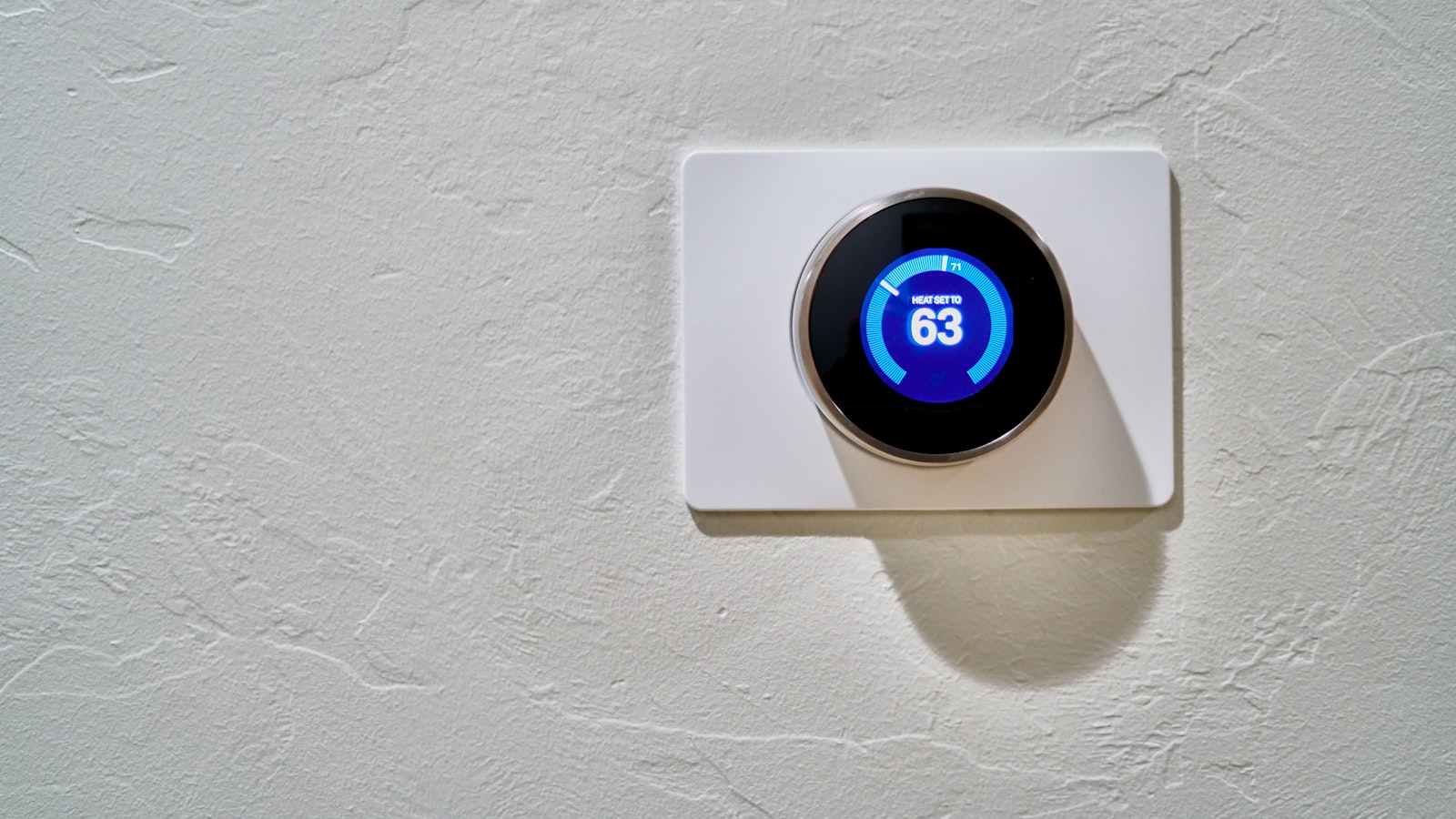
Smart thermostats, Nest, Hive, Tado, Honeywell, are marketed as the obvious heating upgrade. For homeowners, they often are. For renters, the picture is more complicated.
Here is the honest assessment of whether and when a smart thermostat is worth it for tenants.
What smart thermostats actually do
Smart thermostats add several features over basic programmable thermostats:
- Remote control: adjust temperature via app from anywhere.
- Learning algorithms: some devices learn your schedule and adjust heating automatically.
- Geofencing: heating turns down when your phone leaves the area, up when you return.
- Weather integration: some adjust based on outdoor temperature forecasts.
- Detailed usage reports: shows exactly when heating ran and at what cost.
- Integration with other smart-home devices.
The marketed energy savings are typically 10-25 percent vs. constant heating. The reality is that most of this saving comes from features (programmed scheduling) that basic thermostats already provide.
The basic thermostat alternative
Any modern flat has a programmable thermostat capable of setting different temperatures for different times of day. Most users never program these and instead leave them on constant temperature.
A 15-minute programming session can typically achieve:
- Heating on schedule for waking, returning home, and evening.
- Reduced temperature when away or sleeping.
- Different weekday and weekend patterns.
This programmed schedule captures 70-90 percent of the energy savings of a smart thermostat at zero additional cost.
The smart-thermostat marginal benefit
The genuine advantages smart thermostats add over basic programming:
- Remote adjustment: useful for irregular schedules, working from home some days, holidays.
- Geofencing: useful if your schedule is highly variable.
- Learning: some users find this convenient; others find it unpredictable.
- Detailed usage data: useful for the genuinely engaged user; mostly ignored by others.
For someone with a regular Monday-Friday office schedule, these features add limited benefit beyond what basic programming provides. For someone with highly variable work patterns or who travels frequently, the smart features are more valuable.
Tenant-specific complications
Several issues make smart thermostats more complicated for renters:
1. Installation requires touching wiring
Smart thermostats replace your existing thermostat, which involves disconnecting the existing one and wiring the new one. This requires:
- Permission from your landlord (or stealth installation, with risks).
- Storing the original thermostat safely for reinstallation at move-out.
- Comfort with simple electrical work (or paying an electrician £80-150 for installation).
2. Compatibility issues
Not all thermostats work with all heating systems. Specific incompatibilities:
- Old gravity-fed hot water systems may not work with modern smart thermostats.
- Some district heating systems don’t have user-controllable thermostats at all.
- Combi boilers, system boilers, and conventional boilers each have specific requirements.
Check compatibility carefully before purchasing, return policies for thermostats are often limited once installed.
3. The move-out reinstall
When you leave the flat, you have to reinstall the original thermostat. This means:
- Carefully removing the smart thermostat without damaging wires.
- Reinstalling the original (kept safe in storage somewhere).
- Patching any wall damage if the smart thermostat had a different mounting plate size.
4. The wifi dependency
Smart thermostats require constant wifi to function fully. Some basic temperature control continues if wifi fails, but advanced features stop. This creates a dependency that doesn’t exist with basic thermostats.
The honest cost-benefit
For a typical tenant in a typical flat:
- Smart thermostat purchase: £100-250.
- Installation (if outsourced): £80-150.
- Annual energy savings vs. basic programmed thermostat: typically £20-60.
- Annual energy savings vs. constant temperature: typically £100-250 (but this is what programming a basic thermostat achieves anyway).
- Lifespan in current flat: until you move (typically 2-5 years for renters).
The numbers don’t favour smart thermostats for most tenants. The £100-250 upfront cost rarely pays back via the marginal energy savings over basic programming, especially given a short tenant lifespan.
When smart thermostats do make sense for tenants
Specific situations where the upgrade is justified:
- Long-term tenancy (5+ years in same flat).
- Highly variable schedule where geofencing adds real value.
- Multiple-occupant flats where different people need different control.
- Frequent travel where remote adjustment matters.
- Existing smart-home ecosystem where integration adds value.
- The thermostat is your responsibility anyway (some tenancies specify this).
The middle-ground alternatives
Between basic thermostats and full smart thermostats, several middle options exist:
- Smart thermostat clips that attach to existing dial thermostats, no wiring required, often around £50.
- Smart radiator valves, control individual room temperatures via app. £40-80 per radiator. Useful for selective heating.
- Smart plugs combined with electric heaters, for individual room heating control without touching central system.
These options provide some smart-control benefits without the wiring complications of full thermostat replacement.
Related: Cutting Your Energy Bill: The Renter-Friendly Playbook
The recommended approach
For most tenants, the highest-return path is:
- First: spend 15 minutes programming the basic thermostat with a sensible schedule. This captures most of the available energy savings at zero cost.
- Second: install draught excluders, heavy curtains, radiator reflectors. These improve heating efficiency without touching the thermostat.
- Third: if you have multiple unused rooms, install smart radiator valves selectively on those radiators rather than replacing the central thermostat.
- Fourth, optional: consider a smart thermostat only if your schedule, tenancy length, and engagement justify the investment.
Related: Energy Monitor Plugs: Worth the Investment?
The honest summary
Smart thermostats are good products for homeowners, especially those with irregular schedules. For renters, they’re often a solution in search of a problem. The basic programmable thermostat already in your flat, properly programmed, achieves most of the same energy savings without the cost, installation complications, or move-out reinstall.
The exception is the genuinely engaged user with a variable schedule who will use the advanced features daily. For that user, smart thermostats can deliver meaningful value. For everyone else, the £100-250 is better spent on draught proofing, heavy curtains, and a good winter coat.
Related: Summer Cooling Without Air Conditioning
The energy math in one table
| Key point | What it means in practice |
|---|---|
| Remote control | adjust temperature via app from anywhere. |
| Learning algorithms | some devices learn your schedule and adjust heating automatically. |
| Geofencing | heating turns down when your phone leaves the area, up when you return. |
| Weather integration | some adjust based on outdoor temperature forecasts. |
| Detailed usage reports | shows exactly when heating ran and at what cost. |
What an experienced household looks like
It is worth being honest about what good practice in this area looks like after several years of attention. It is not a magazine-perfect lifestyle. The bins are sorted but not labelled in artisan calligraphy. The pantry has a small set of jars rather than a coordinated wall display. The flat smells like whatever was cooked, not like a perfumed lobby. The energy bill is lower than the neighbourhood average but the household still has a TV, a kettle, and a freezer.
What is different is the defaults. The reusable bag is genuinely in the everyday bag. The thermostat is genuinely scheduled. The food in the fridge is genuinely used before being wasted. The shopping is genuinely planned rather than improvised. None of this requires the household to think harder about sustainability than the average household; it requires the defaults to have been set once and then left alone. The mental load of good practice is, in the long run, significantly lower than the mental load of constantly negotiating with disposable habits.
Sources and further reading
Frequently asked questions
Some will, some won't. Ask first. The risk of installing without permission is being charged for restoration at move-out if the original thermostat is missing or damaged.
Marginally vs. a properly-programmed basic thermostat (typically 5-15 percent additional savings). Significantly vs. constant unsstructured heating, but a basic thermostat captures most of that benefit anyway.
For most modern installations, yes, the wiring is usually 2-4 wires and well-documented. If you're uncomfortable with electrical work, a professional installation costs £80-150.
The Tado smart thermostat clip is uniquely renter-friendly, it attaches to existing dial thermostats without wiring changes. Cheaper than full replacement and trivial to remove at move-out.