Second-hand furniture has, in the past few years, transitioned from a slightly apologetic budget choice to one of the most aesthetically interesting ways to furnish an apartment. A flat made of carefully chosen second-hand pieces looks more individual, more grown-up, and dramatically more sustainable than a flat that arrived in flat-packed boxes.
The trick is knowing where to look, what to avoid, and how to mix things so the result feels deliberate rather than accidental.
Start with the heavy pieces
The pieces that benefit most from being bought second-hand are the heavy, expensive, long-lasting ones: sofas, dining tables, dressers, bookshelves, beds. New, these items are expensive, often poorly made, and bulky to ship. Second-hand, they are routinely available for a fraction of the new price and usually built to a higher standard than current equivalents.
Older furniture (pre-2000) is almost always made from solid wood, with proper joinery. Newer mass-market furniture is often particleboard with a veneer, held together by cam-locks that fail after one or two moves. A second-hand 1970s sideboard will outlast three new ones from a big-box retailer.
Where to look, ranked
The hierarchy of second-hand sources for city flats, roughly from best value to most curated:
- Local Facebook Marketplace, Gumtree, or equivalent. The largest selection, lowest prices, fastest turnover. Best for sofas, tables, bookshelves, and bulky items the seller wants gone.
- Charity shops with furniture warehouses. Curated by staff, often higher quality, prices fair but not bargain. Best for chairs, lamps, smaller pieces.
- Estate sales and house clearances. Whole-house lots being cleared over a weekend. Excellent for matching sets and quality vintage.
- Vintage and antiques shops. Hand-curated, more expensive, but the pieces are usually verified and clean. Best for statement items.
- Council bulky-waste days. Free if you can get there with a van. Quality varies wildly.
What to buy second-hand without hesitation
Solid wood furniture (dining tables, sideboards, bookshelves, desks) is the absolute sweet spot. Mid-century modern pieces (1950s, 1970s) are particularly well-made and have aged into a current aesthetic. Brass and ceramic lamps. Mirrors with wooden or metal frames. Rugs (clean them professionally before installing). Cast-iron cookware. Glassware and ceramics. Books. Plant pots.
These items either last indefinitely, can be restored easily, or are essentially indestructible. Buying them new is rarely better; buying them second-hand saves money, prevents new manufacturing, and usually produces a more interesting object.
What to consider carefully
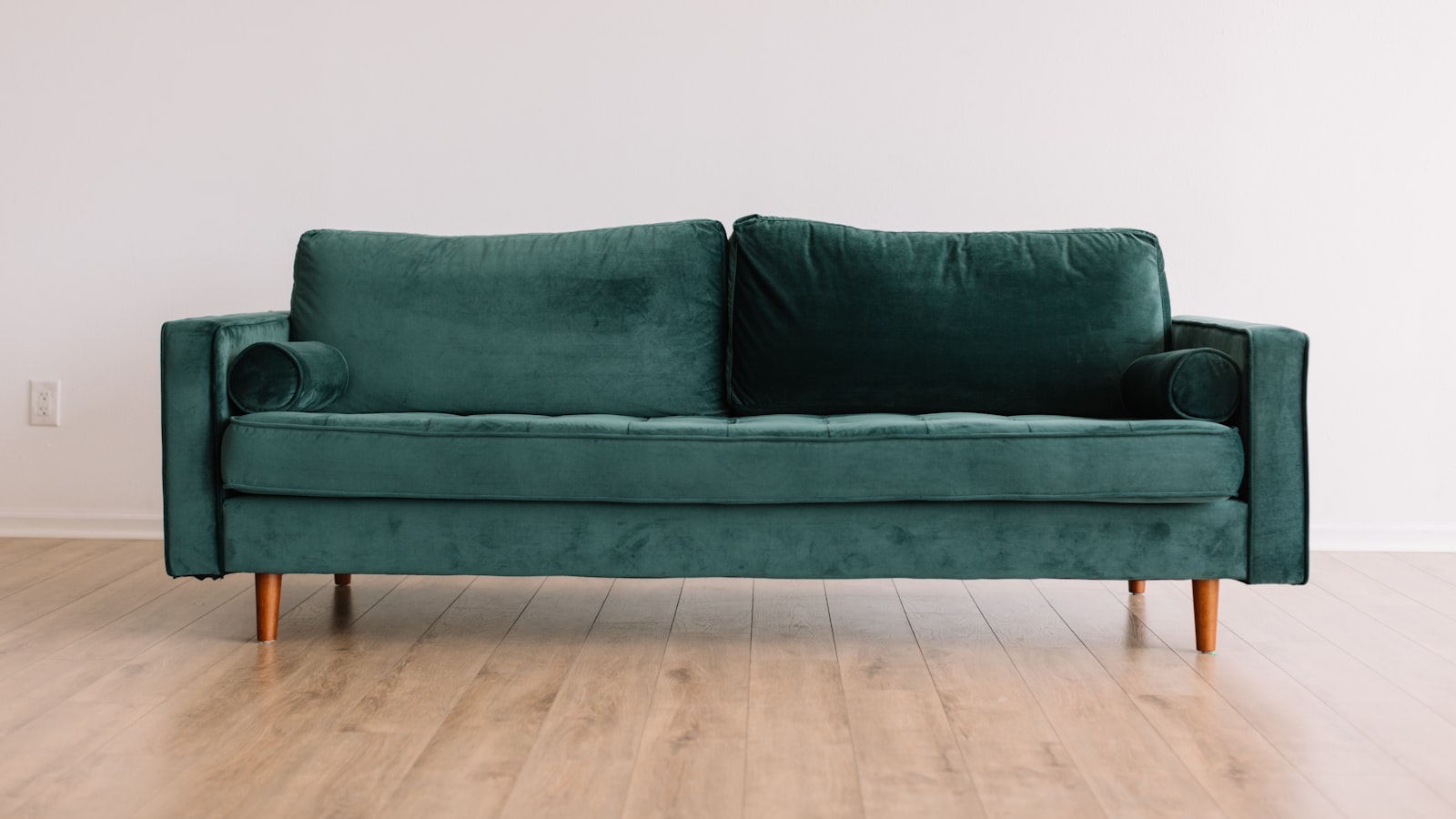
Upholstered sofas and armchairs are worth second-hand if the frame and cushions are sound, but inspect closely for bedbugs and odours. A reputable charity shop will already have done this. A Marketplace listing requires you to do it yourself; bring a flashlight and check the seams of cushions and the underside of the frame.
Mattresses should never be bought second-hand. Even visually clean mattresses can contain dust mites, bedbug eggs, or moisture damage. This is the one exception to the second-hand rule.
Wardrobes and large cabinets are difficult to transport up city stairwells and into small flats. Measure the doorway, the stairwell, and the destination carefully before committing. A second-hand wardrobe is no bargain if it cannot fit through the front door.
The “one quality piece” rule
The fastest way to make a second-hand-furnished flat look intentional rather than improvised is to invest in one quality piece per room and build around it. A beautiful vintage sofa. A solid oak dining table. A well-made desk. Once that anchor is in place, the supporting pieces can be more eclectic and the room still reads as designed.
Without an anchor, a flat full of inexpensive second-hand pieces can look thrown together. With an anchor, the same pieces look curated. The anchor is usually the most expensive second-hand purchase and the cheapest way to improve the whole room.
Restoration without committing your life
Many second-hand pieces benefit from a small amount of restoration. The realistic amount most flat-dwellers can take on:
- Cleaning and polishing wood with a beeswax or oil finish.
- Replacing knobs and handles (a fast, transformative upgrade).
- Sanding and refinishing a small surface (a side table, not a wardrobe).
- Reupholstering a single dining chair (a manageable Saturday project).
- Stripping and repainting metal frames.
Reupholstering a sofa, refinishing a large dresser, or rebuilding a leg are jobs to outsource or skip. The line between “useful project” and “year-long failure” is somewhere around a single weekend’s work.
Related: Small-Apartment Eco Routines That Actually Stick
The styling that holds it together
Second-hand furniture tends toward variety. The styling rules that make variety work in a small flat: keep walls and large surfaces relatively quiet so the pieces stand out. Use a coherent colour palette in the soft items (cushions, throws, rugs) to tie the pieces together. Lean into the mix, pretending three different second-hand chairs are a set fails; treating them as deliberate variety succeeds.
Mixing periods is usually more elegant than matching them. A mid-century sofa, an industrial-era desk, and a contemporary rug can sit happily in the same room. Three matching mid-century pieces start to feel like a showroom.
Related: Reducing Plastic in a Renter’s Kitchen Without Going to War with It
The first-year goal
A reasonable first-year goal for a second-hand-furnished flat: 80 percent of the furniture is second-hand, the remaining 20 percent is either new-essential (mattress) or thoughtfully bought new from a small workshop. Over time the percentage shifts further toward second-hand as you find better replacements for the new items.
The result is a flat that costs less to furnish, has a fraction of the embedded carbon, looks more interesting than a catalogue, and changes slowly over years rather than being thrown out at every move. That is the version of sustainability that compounds.
Related: Writing an Eco-Conscious Grocery List That Feeds a Real Week
At a glance
| Key point | What it means in practice |
|---|---|
| Local Facebook Marketplace | Gumtree, or equivalent. The largest selection, lowest prices, fastest turnover. Best for sofas, tables, bookshelves, and bulky items the sel |
| Charity shops with furniture warehouses | Curated by staff, often higher quality, prices fair but not bargain. Best for chairs, lamps, smaller pieces. |
| Estate sales and house clearances | Whole-house lots being cleared over a weekend. Excellent for matching sets and quality vintage. |
| Vintage and antiques shops | Hand-curated, more expensive, but the pieces are usually verified and clean. Best for statement items. |
| Council bulky-waste days | Free if you can get there with a van. Quality varies wildly. |
How to put this into practice this week
The most reliable way to translate a guide like this into something that actually changes your week is to pick the single highest-use change in it and ignore everything else for the first fortnight. The rule is the same one that makes physical training work: load is fine, variety is fine, but the consistent application of a small number of well-chosen movements is what produces results. Sustainability follows the same logic. The dozen interesting interventions you have just read about will all matter at some point. The two you build into your routine first will matter the most.
If you genuinely cannot pick, default to the intervention with the strongest financial signal. Where money and impact line up, the habit forms easily because the reinforcement happens monthly on a bill rather than abstractly in the climate news. Once that habit is invisible, the next one is easier to add. Six months of one small habit at a time produces a meaningfully different household, and you will barely notice the transition while you live through it.
Sources and further reading
Frequently asked questions
Inspect seams, cushion zippers, and crevices with a flashlight. Look for small dark spots (faeces), shed shells, or live insects. If anything looks suspicious, do not buy. Even reputable sellers can be unaware.
Often significantly. A solid oak dining table second-hand is often 30, 50 percent of the price of IKEA's equivalent, with better build quality. The savings on bookshelves and sofas are similar.
Most cities have hourly van rental or man-and-van services for £30, 60 per trip. A small van can usually move a sofa or dining table comfortably. Plan multiple pickups on the same day to amortise the cost.
Most furniture, even quality second-hand, does not appreciate in value. Buy because you like the piece and want it to live in your home, not as an investment. The genuine value is in low ongoing cost and longevity.