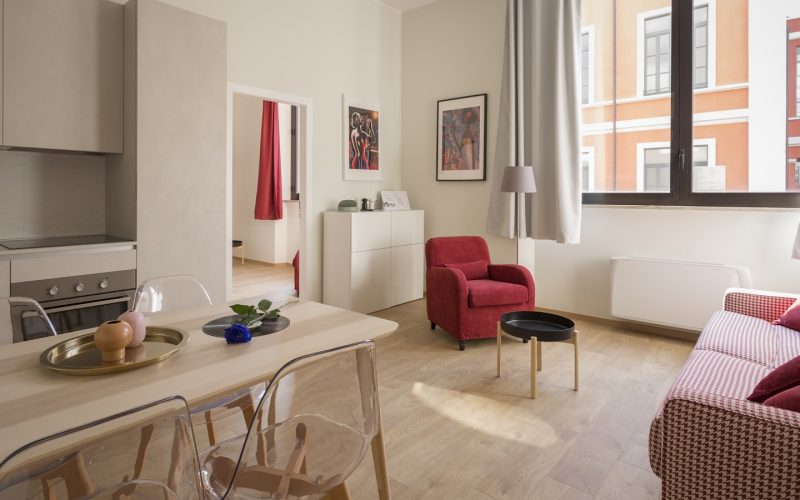
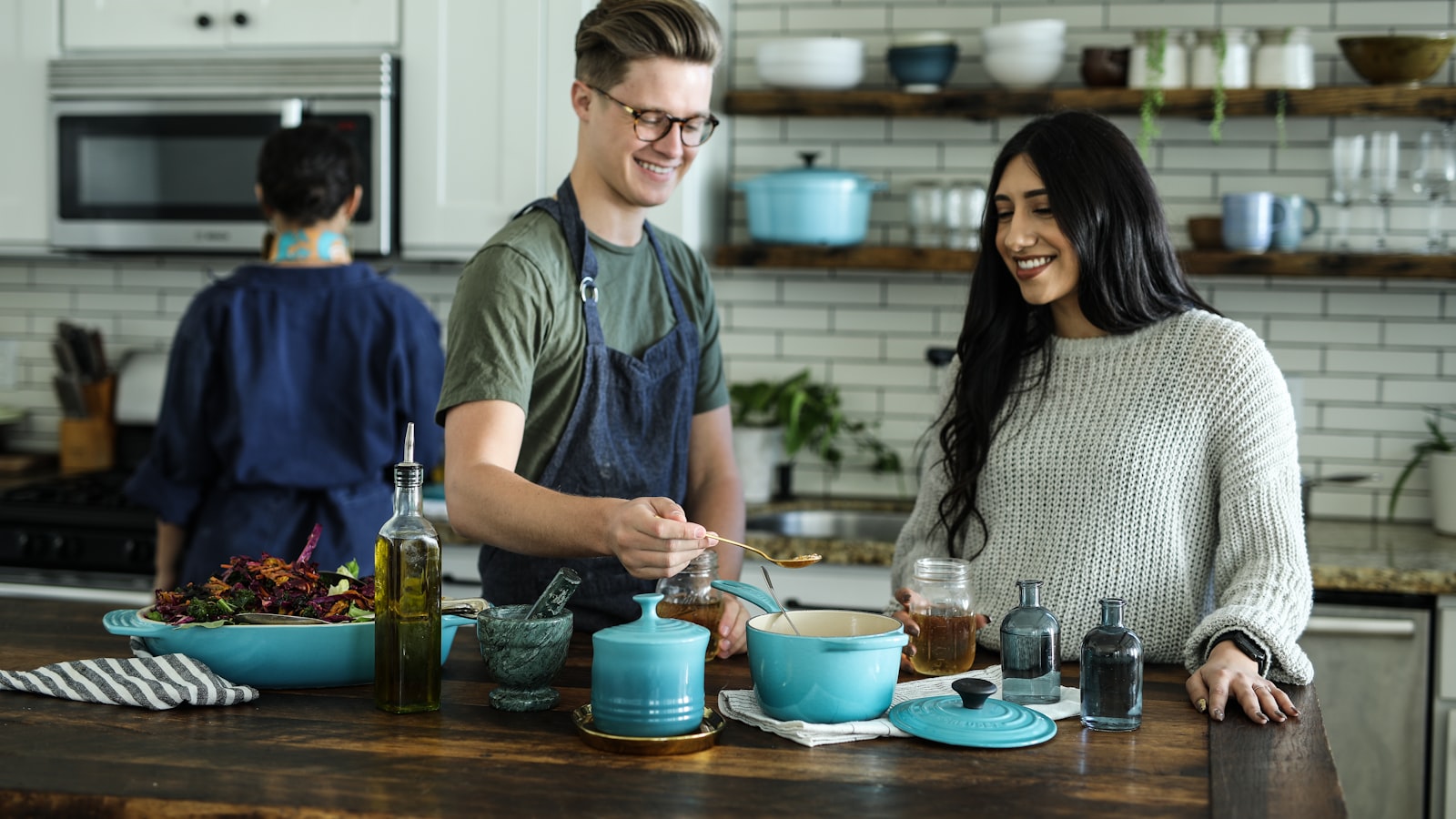
Most “sustainable cooking” content assumes a chef’s kitchen with two ovens, a six-burner stove, and a pantry full of grains in sequenced jars. Most of us have a two-burner hob, a microwave on a shelf, and one functional counter the size of a chopping board. The good news is that small kitchens are usually more efficient kitchens; the bad news is that most equipment and most recipes are designed for the larger kind.
Here is how to cook lower-impact meals in genuinely tight quarters.
The one-pot rule
The single most useful constraint in a small kitchen is to default to one-pot meals. Risottos, stews, traybakes, stir-fries, dals, frittatas, pasta with the sauce built into the pasta water. A meal that uses one pot uses less energy (one heat source), less water (one washing-up cycle), less storage (no specialised pans needed), and less time.
Build a rotation of six one-pot meals you can cook from memory. A weeknight chickpea curry. A tray of roasted vegetables with a grain. A pasta with garlic, olive oil, lemon and whatever green is in the fridge. A frittata that absorbs leftover vegetables. A pearl-barley stew. A miso noodle bowl. Once these are in your head, weekday cooking becomes almost frictionless and the kitchen never sees more than two dirty items at once.
Equipment, edited
A small kitchen does not need a single-use appliance for everything. The list of equipment that actually pays for itself in a flat:
- One heavy-bottomed pot or Dutch oven (8, 10 inch). Handles stews, pasta water, deep-frying, and bread-baking.
- One cast-iron pan (10 inch). Handles eggs, sears, traybakes, and outlives every other pan you will own.
- One sharp chef’s knife. Replaces most other knives.
- One small saucepan for sauces, grains, and reheating.
- One baking sheet that fits your oven.
- A kettle. The single most energy-efficient way to boil water for tea, pasta, blanching, anything.
That is the kit. A blender, a food processor, a stand mixer, and a slow cooker are all optional. Most flats accumulate them, use them four times, and store them for a decade.
Energy: the hidden multiplier
The choice of cooking method matters more than the choice of recipe, energy-wise. From most to least efficient per portion: kettle, microwave, induction hob, gas hob, electric oven, electric grill.
The practical implication is that boiling pasta water in a kettle and then transferring it to a pot uses dramatically less energy than starting the pot cold. Reheating leftover stew in a microwave uses a fraction of the energy of putting it back on the hob. Roasting two trays of vegetables at once uses the oven’s energy more efficiently than running two separate sessions. None of these moves change the meal; they change the bill.
Plant-forward by default
The highest-use sustainability move in any kitchen is shifting the protein. Beef and lamb have roughly ten times the carbon footprint per kilogram of chicken, and roughly 30 times the footprint of beans or lentils. Pushing red meat to a once-a-fortnight category, leaving room for fish and chicken twice a week and plant proteins on the other days, is the single largest reduction most kitchens can make.
The trick is to learn to cook beans and pulses well, because they are where many home cooks lose interest. A well-made dal is genuinely delicious; a bowl of underseasoned lentils is not. The investment of two months learning four good plant-forward recipes pays back for a decade.
Cook once, eat three times
Batch cooking sounds militant. It is actually the laziest sustainability strategy. Cook a pot of grains on Sunday, eat one portion that night, refrigerate two more for Tuesday and Thursday lunches. Roast a tray of vegetables, eat half hot tonight, store half for tomorrow’s salad. Make a double batch of curry, eat one tonight, freeze one for the back-pocket weeknight when you have no energy.
The energy you spent cooking is amortised over multiple meals. The time you save during the week is large. The risk of resorting to takeaway, which has higher per-meal emissions, falls dramatically.
Use the freezer like an asset
A small flat freezer is a fantastic sustainability tool, but it is usually misused. Common mistakes: freezing things in volumes too large to reuse, freezing things without labels, freezing things you will never get around to eating.
Fix this with three rules. Freeze in single-portion sizes (a meal’s worth of soup, a slice of bread). Label everything with the contents and the date. Eat down the freezer once every six weeks, a “freezer week” where you only cook from frozen, to clear out anything older than three months.
Related: The Sustainable Grocery Trip, Translated for a City Schedule
Scraps, used
The professional kitchen wastes much less than the home kitchen, because it has a use for every scrap. Translate the discipline at small scale: vegetable trimmings, onion ends, parmesan rinds, and herb stems go into a “stock bag” in the freezer. When the bag is full, simmer it with water for an hour. Strain. Freeze in mason jars or ice-cube trays. You now have free vegetable stock for the next month.
Other scrap moves: bread heels become breadcrumbs. Citrus peels candy easily. Stale herbs blitz into pestos. None of these are gourmet exercises; they are just slightly different defaults that catch what would otherwise hit the bin.
Related: The Minimalist City Wardrobe That Still Looks Like a Person Lives There
The honest endpoint
An eco-conscious small kitchen is not visibly different from a normal one. It just consumes less, wastes less, and runs more smoothly. The hob is used efficiently. The fridge is not a museum. The pans are a small, working set. The freezer is an asset, not an archaeological site. That is the realistic ceiling, and it is more than enough to meaningfully reduce the per-meal environmental cost of feeding yourself in a city.
Related: Green Cleaning Products for City Apartments, Tested in Real Flats
At a glance
| Key point | What it means in practice |
|---|---|
| One heavy-bottomed pot or Dutch oven (8 | 10 inch). Handles stews, pasta water, deep-frying, and bread-baking. |
| One cast-iron pan (10 inch) | Handles eggs, sears, traybakes, and outlives every other pan you will own. |
| One sharp chef’s knife | Replaces most other knives. |
| One small saucepan for sauces | grains, and reheating. |
Why this matters beyond the household
It is easy to feel that individual sustainability is a small thing in a world of large emissions. The honest framing is that individual practice and structural change reinforce each other rather than competing. When you cycle to work, the count of cyclists in your neighbourhood goes up, which influences local council decisions about cycling infrastructure, which makes cycling easier for the next person who considers it. When you switch to a renewable energy tariff, the market for renewable generation grows, which lowers the cost of new installations and accelerates the energy transition.
These mechanisms are slow and partially invisible from inside any single household. They are also genuinely operative. The cities and countries that have moved fastest on climate are the ones where significant numbers of individuals made early shifts in behaviour, which gave political cover to elected officials who then enacted broader structural changes. Your individual choices are not the whole story, but they are the part of the story you actually control.
Sources and further reading
Frequently asked questions
Yes, considerably. Induction transfers around 85 percent of energy to the pan; gas transfers around 40 percent. The remainder is lost to the surrounding air.
A typical western diet contributes around 2 tonnes of CO2e per year from food. Cutting red meat to once a fortnight typically saves around 500 kg of CO2e per year per person.
Rarely. Restaurant-quality cooking at home uses less packaging, no driving, and offers better portion control. Delivery is most sustainable when used to consolidate a multi-meal restaurant visit, not a single weekday dinner.
Only if you will use it weekly. It is energy-efficient per hour but takes counter or cupboard space. A Dutch oven on a low hob accomplishes the same thing without the dedicated appliance.