
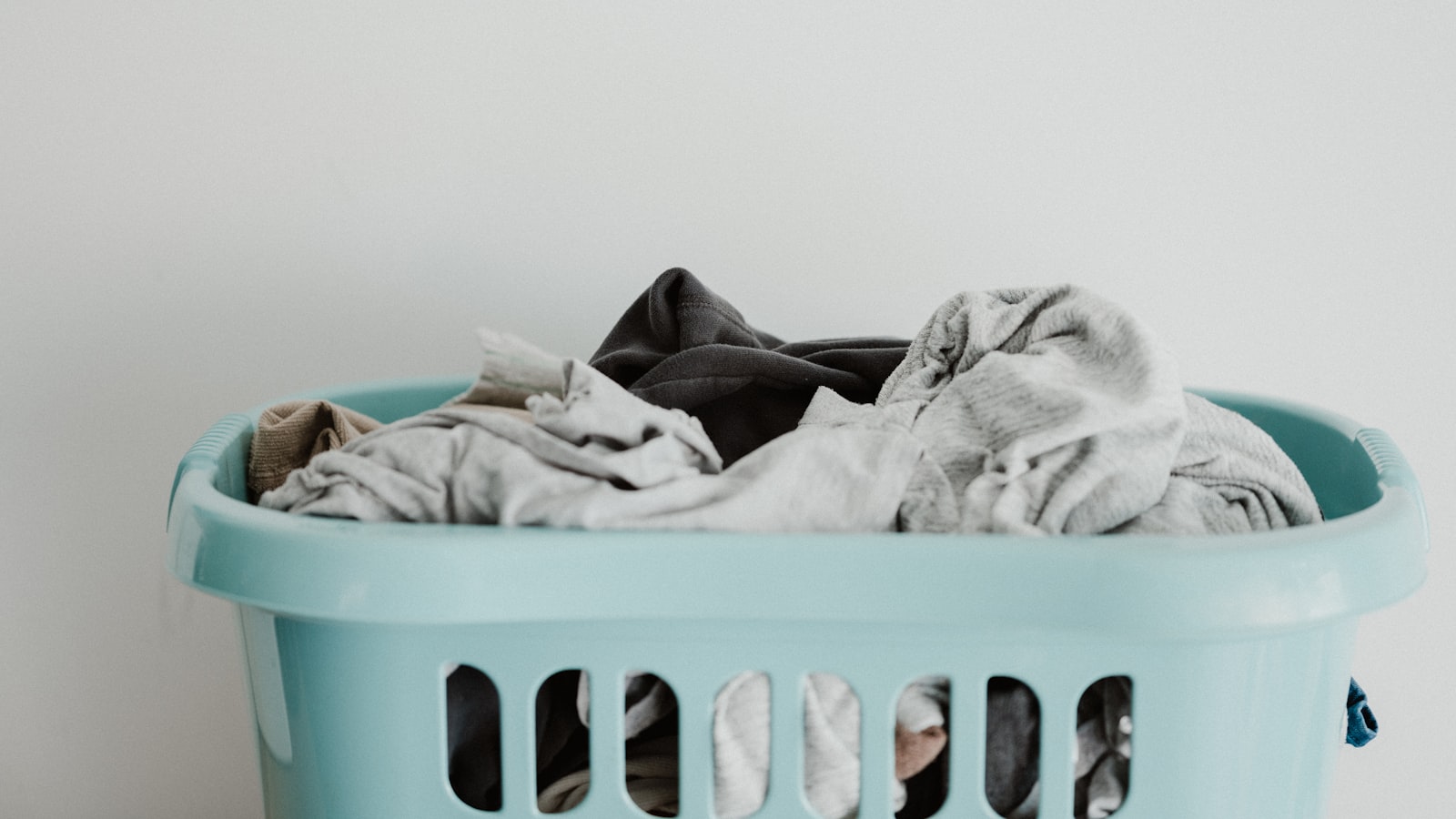
Laundry is one of the higher-impact things a city flat does on a routine basis. Hot wash cycles use significant electricity. Tumble dryers use more. Detergents add chemicals to wastewater. Synthetic fibres shed microplastics into the same water. None of these problems are solved by a single product. They are solved by quietly shifting a small set of habits.
Here is the realistic version of low-impact laundry for someone who lives above a shop, shares a machine, and does not have a back garden.
Wash less, well
The single most overlooked sustainability move in laundry is washing fewer things less often. Jeans rarely need to be washed after one wear. Sweaters and cardigans can be aired and worn five or six times before they need cleaning. Athletic wear and underwear should be washed every wear; t-shirts and shirts that touch skin, generally after each wear.
The “sniff and inspect” routine sounds undignified. It is also the move that quietly halves a flat’s laundry volume. Garments last longer (heat and tumbling are the main causes of clothing wear), the machine runs less often, and a smaller weekly laundry pile becomes much easier to manage.
Cold is the new hot
Modern detergents are formulated to clean effectively at 20 or 30 degrees Celsius. The 40-degree wash is rarely necessary; the 60-degree wash is for towels, bedlinen during illness, and heavily stained items. Cold cycles use roughly 70 percent less electricity than 40-degree washes, because the bulk of the energy in a wash goes to heating water.
Run the test on yourself: switch two consecutive loads of regular clothes to a cold cycle and assess the results. In 19 out of 20 cases there is no difference in cleanliness. The 20th is usually a stain that needed pre-treatment regardless of temperature.
The full-load rule
Washing machines and dryers both run more efficiently full than half-full. A washing machine uses roughly the same water and electricity to wash three shirts as it does to wash thirty. A dryer running half-empty wastes most of its heat on the empty space.
If you cannot fill a load, wait. If the wait is too long because you only have a few clean things left, you are washing too much (see “wash less, well” above). A reliable four-load week (whites, darks, towels, delicates) on full loads is almost always more sustainable than a daily one-load habit.
Tumble dryers, used sparingly
If your flat has a dryer, treat it as a finishing tool rather than a primary drying surface. Air-dry most loads on a rack or line, then put items into the dryer for twenty minutes on a low setting to soften and remove the last residual damp. This combination uses a fraction of the energy of a full dry cycle while producing a similar final feel.
If your flat has no dryer, build a serious drying setup. A two-tier folding rack near a window, plus a small clothes airer that can fit over a bath, will accommodate a four-load week for two people. Air dries in 12, 18 hours in a ventilated flat. Open a window for an hour after hanging the load to push damp air out.
Detergent, refilled
Detergent packaging is one of the easier wins. Switch from bottled detergent to either a refillable concentrate or, increasingly available, laundry sheets or capsules in cardboard. Both formats produce a fraction of the plastic of a typical bottle and work in standard machines.
Avoid laundry “boosters”, colour catchers, scent boosters, anti-stain powders. They are mostly redundant against a well-formulated base detergent, add packaging, and contribute to wastewater complexity. If you have a recurring problem (stubborn stains, sensitive skin) target the specific problem with a specific product rather than layering them all.
Microplastics, addressed
Synthetic clothing (polyester, nylon, acrylic) sheds microplastic fibres in every wash. A typical load can shed hundreds of thousands of fibres into wastewater. The problem is real and growing.
Two interventions reduce it. A microplastic-catching laundry bag (a fine mesh bag for synthetic items) captures roughly 80 percent of the fibres shed during washing. A microplastic filter that screws onto the machine outlet catches even more, though installation is not always renter-friendly. For most flats, the laundry bag is the realistic move.
The longer-term solution is shifting your wardrobe toward natural fibres (cotton, linen, wool, hemp). This is a multi-year project, not a weekend one, but it pays off in fewer microplastics and longer-lasting garments.
Related: The Sustainable Bedroom, Furnished Honestly
Stains, before the wash
Stains are easier and more sustainable to treat at the point of incident than at the point of washing. A small jar of dish soap and a clean cloth, kept in the kitchen, will resolve roughly 70 percent of food stains in under a minute if applied immediately. Soda water for wine, cold water for blood, dish soap for oil.
The result is that your eventual wash does not need a high temperature or aggressive detergent, because the stain is already gone. Pre-treating at point-of-incident is a quietly enormous win for both clothing life and machine settings.
Related: Eco Cooking in a Small Kitchen, Without Buying a Second Kitchen
The five-rule summary
If this is too much, the five-rule version is this. Wash less often. Wash colder. Wash full loads. Air-dry. Refill detergent. Five changes, each almost free to install, that quietly halve the environmental cost of laundry in a city flat without any visible difference in how clean your clothes are.
Related: Small-Apartment Eco Routines That Actually Stick
What an experienced household looks like
It is worth being honest about what good practice in this area looks like after several years of attention. It is not a magazine-perfect lifestyle. The bins are sorted but not labelled in artisan calligraphy. The pantry has a small set of jars rather than a coordinated wall display. The flat smells like whatever was cooked, not like a perfumed lobby. The energy bill is lower than the neighbourhood average but the household still has a TV, a kettle, and a freezer.
What is different is the defaults. The reusable bag is genuinely in the everyday bag. The thermostat is genuinely scheduled. The food in the fridge is genuinely used before being wasted. The shopping is genuinely planned rather than improvised. None of this requires the household to think harder about sustainability than the average household; it requires the defaults to have been set once and then left alone. The mental load of good practice is, in the long run, significantly lower than the mental load of constantly negotiating with disposable habits.
At a glance
| Section | What the article covers |
|---|---|
| Wash less, well | The single most overlooked sustainability move in laundry is washing fewer things less often. |
| Cold is the new hot | Modern detergents are formulated to clean effectively at 20 or 30 degrees Celsius. |
| The full-load rule | Washing machines and dryers both run more efficiently full than half-full. |
| Tumble dryers, used sparingly | If your flat has a dryer, treat it as a finishing tool rather than a primary drying surface. |
| Detergent, refilled | Detergent packaging is one of the easier wins. |
Sources and further reading
Frequently asked questions
Not the way 60-degree washes do. For regular clothes this does not matter. For underwear, towels, bedlinen during illness, and items contaminated with raw meat, a hot wash is appropriate.
A well-made cotton t-shirt washed cold and air-dried lasts 5, 7 years of regular wear. The same shirt washed hot and tumble-dried lasts 2, 3 years. Heat is the main agent of wear, not use.
The good ones are. Look for ingredients like protease, amylase and lipase enzymes, those are what actually break down stains. Brand origin matters less than enzyme content.
Yes, with ventilation. Open a window during and after drying, use a small dehumidifier if your flat is poorly ventilated, and avoid drying inside an unheated bathroom. Indoor drying is fine when paired with airflow.