
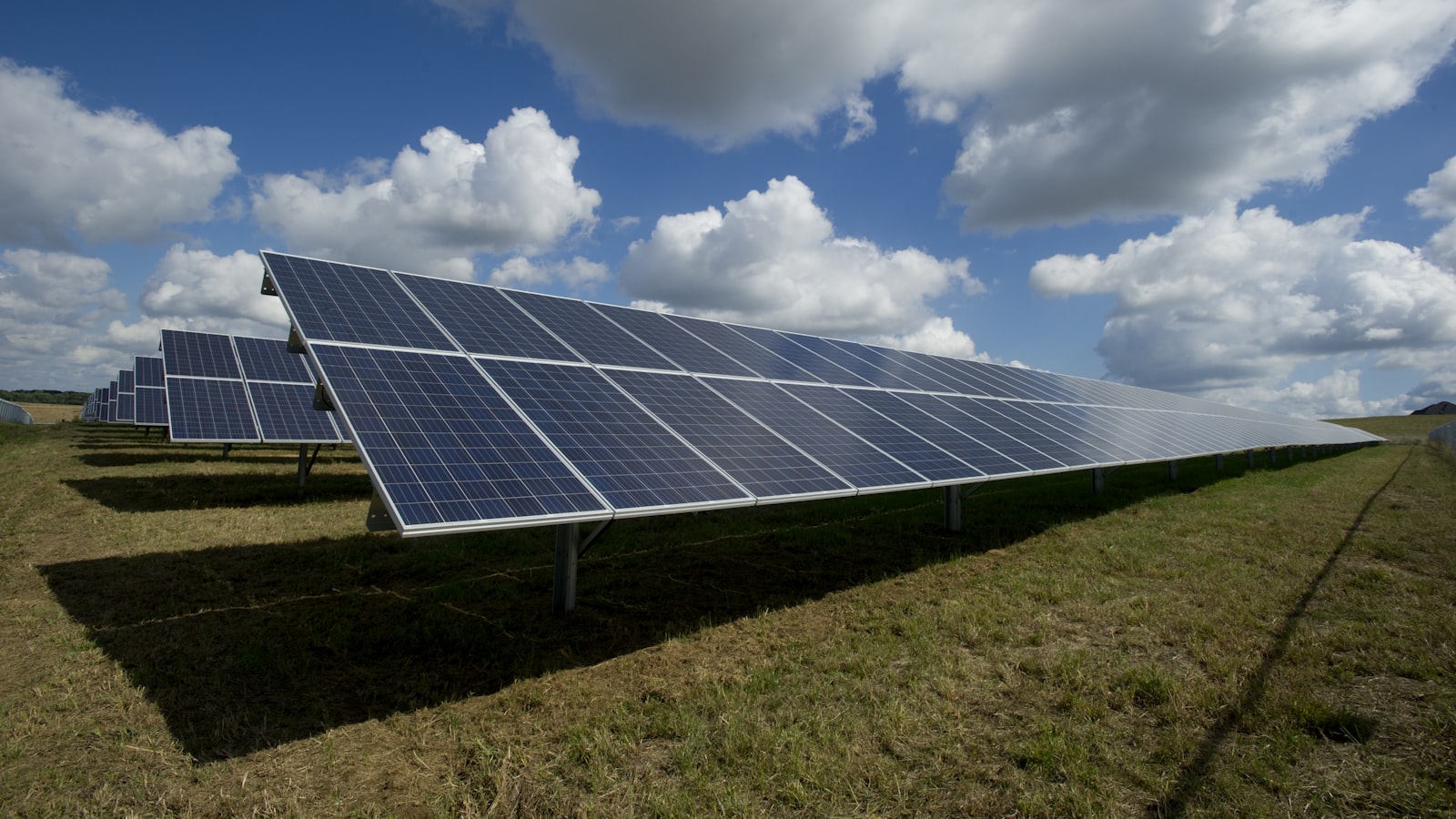
Community solar cooperatives let people who can’t install rooftop solar, renters, flat dwellers, people with shaded roofs, invest in shared solar installations and benefit from the resulting clean energy and modest financial returns. They’re one of the most accessible ways to participate in the renewable energy transition without owning a suitable building.
Here’s how they work, what they deliver, and how to engage with one.
The basic model
A community solar cooperative is a member-owned organisation that:
- Pools investment from many members (typically £100-5,000 per member).
- Uses the pooled capital to install solar panels on a shared site (community building, school, hospital, farm, warehouse).
- Sells the generated electricity to the host site or back to the grid.
- Returns income to members through dividends or bill credits.
- Reinvests profits in new installations or community projects.
The structures
Community solar takes several forms:
1. Bencom (Community Benefit Society)
The most common UK structure. Members invest in shares; the cooperative owns and operates solar installations; returns are paid to members but profits primarily benefit the community.
2. Limited cooperative
Similar structure but with returns more weighted toward investors. Less common.
3. Crowdfunded community solar
Crowdfunding platforms (Abundance, Ethex) host community solar investments with various structures.
4. Pay-as-you-go community solar
Newer model where members subscribe to a portion of an off-site installation, paying for the electricity it generates at fixed rates.
The financial returns
Typical returns:
- Dividends: 3-6 percent annually, often tax-advantaged through EIS or SEIS schemes in the UK.
- Capital return: initial investment typically returned over 15-25 years.
- Community benefit: a portion of profits funds local community projects (often 10-20 percent of revenue).
The returns are lower than aggressive stock market investing but higher than savings accounts, with explicit environmental and social impact.
The environmental returns
For a typical £500 investment:
- Underlying solar generates roughly 500-800 kWh/year.
- Carbon saving vs. grid electricity: 150-250 kg CO2/year.
- Over a 25-year installation life: 3,750-6,250 kg CO2 saved.
Not enormous individually, but cumulative across hundreds of members and many installations, the impact is meaningful.
The community benefits
Beyond investor returns:
- Local energy resilience.
- Support for local infrastructure.
- Demonstration of renewable energy viability.
- Community-led economic development.
- Skills and education in renewable energy.
- Often grants or donations to local sustainability projects.
How to find community solar opportunities
UK resources:
- Community Energy England: directory of community energy projects.
- Power for People: campaigns for community energy with associated project listings.
- Ethex: ethical investment platform with community renewable projects.
- Abundance: crowdfunding platform with community energy projects.
- Local sustainability networks: often connected to local community energy groups.
Examples of existing cooperatives
To illustrate the model:
- Brighton Energy Cooperative: solar installations on Brighton commercial buildings.
- Ovesco (Lewes): solar on schools and community buildings in East Sussex.
- Ealing Community Energy: solar on schools and council buildings in West London.
- Green Energy Nayland: solar on village hall and community buildings in Suffolk.
- Edinburgh Community Solar Cooperative: solar on Edinburgh public buildings.
Each has slightly different governance, returns, and minimum investments. The pattern is the same: members invest, cooperative installs solar, returns are split between members and community benefit fund.
The investment process
Joining a cooperative typically involves:
- Identifying a cooperative with active investment opportunities.
- Reading the share offer document (typically 20-40 pages with financial details and risks).
- Investing the minimum (often £100 or £250) up to a maximum (often £10,000-100,000).
- Receiving share certificates and welcome materials.
- Annual reports and AGM invitations.
- Annual dividends (assuming the cooperative is profitable).
The risks
Honest risk assessment:
- Investment risk: like any investment, returns aren’t guaranteed. Solar prices and yields can change.
- Illiquidity: shares can be hard to sell, usually not freely transferable.
- Long-term horizon: investment timeline is 15-25 years.
- Regulatory changes: subsidy schemes have changed historically; future changes possible.
- Cooperative failure: rare but possible if mismanaged.
The mitigation: invest only money you can afford to lock up for the long term. Diversify across multiple cooperatives if investing substantially.
The tax efficiency
Many community energy investments qualify for:
- EIS (Enterprise Investment Scheme): 30 percent income tax relief on investment.
- SITR (Social Investment Tax Relief): similar relief specifically for social enterprises.
- SEIS (Seed Enterprise Investment Scheme): for early-stage projects.
These reliefs can significantly improve effective returns. Check current rules and confirm cooperative’s qualification before investing.
Related: Block-Level Rainwater Projects: Working at Building Scale
Starting a new cooperative
If no community solar exists in your area, starting one is possible but substantial work. The realistic path:
Step 1: Build founding group
5-10 committed people with relevant skills (legal, financial, technical, community).
Step 2: Identify suitable site
Public or commercial building with: south-facing roof, structural capacity, suitable electrical infrastructure, willing host.
Step 3: Engage with umbrella support
Community Energy England provides templates, training, and mentoring for new cooperatives.
Step 4: Establish legal structure
Register as Bencom, cooperative, or other appropriate structure.
Step 5: Develop project proposal
Financial modelling, engineering assessment, regulatory compliance.
Step 6: Raise capital
Share offer to community, typically £50,000-500,000 for first project.
Step 7: Install and operate
Contract with installers, manage ongoing operations.
Realistic timeline: 18-30 months from formation to operational installation. Substantial commitment but creates an institution that benefits the community for decades.
Related: Finding (and Supporting) Local Makers Markets
The honest assessment
Community solar cooperatives are a genuine win across multiple dimensions: modest but real financial returns, meaningful environmental impact, community benefit, democratic ownership of energy infrastructure. The barriers to participation are low for joining existing cooperatives (£100-500 minimum investment in many cases).
For renters who can’t install rooftop solar, community solar may be the most impactful single sustainability investment available. The combination of carbon impact, community benefit, and modest financial return is hard to match elsewhere.
Related: Cooperative Bulk Buying Clubs: How They Work and Why They’re Spreading
How to put this into practice this week
The most reliable way to translate a guide like this into something that actually changes your week is to pick the single highest-use change in it and ignore everything else for the first fortnight. The rule is the same one that makes physical training work: load is fine, variety is fine, but the consistent application of a small number of well-chosen movements is what produces results. Sustainability follows the same logic. The dozen interesting interventions you have just read about will all matter at some point. The two you build into your routine first will matter the most.
If you genuinely cannot pick, default to the intervention with the strongest financial signal. Where money and impact line up, the habit forms easily because the reinforcement happens monthly on a bill rather than abstractly in the climate news. Once that habit is invisible, the next one is easier to add. Six months of one small habit at a time produces a meaningfully different household, and you will barely notice the transition while you live through it.
How the shared arrangement works
| Point | What it means in practice |
|---|---|
| 1. Bencom (Community Benefit Society) | The most common UK structure. |
| 2. Limited cooperative | Similar structure but with returns more weighted toward investors. |
| 3. Crowdfunded community solar | Crowdfunding platforms (Abundance, Ethex) host community solar investments with various structures. |
| 4. Pay-as-you-go community solar | Newer model where members subscribe to a portion of an off-site installation, paying for the electricity it generates at fixed rates. |
| Step 1: Build founding group | 5-10 committed people with relevant skills (legal, financial, technical, community). |
Sources and further reading
Frequently asked questions
Minimum investments typically range £100-500. Maximum often £10,000-100,000. Returns scale proportionally.
Typically 3-6 percent annual return, plus capital return over 15-25 years. Lower than stock market average but with explicit environmental impact and lower risk profile.
Usually not easily, shares are typically illiquid. Some cooperatives have buy-back schemes; check specific terms before investing.
Yes, economics have shifted but most cooperatives now work through direct sales to host buildings or new market mechanisms. Returns are slightly lower than historical but still positive.